We ask children to solve equations, remember historical dates, analyse texts and prepare for exams. Then we allow them to sit almost motionless for most of the day.
We measure reading levels and mathematics scores, but rarely ask whether a child can run comfortably, prepare a healthy meal, control their breathing under pressure, recover after physical effort or understand what their body needs.
We treat the mind as the important part of the child and the body as the vehicle that carries it into the classroom.
That makes no sense to me.
A child does not experience life as a mind separated from a body. Energy, concentration, confidence, sleep, movement, food and emotions are connected. If the body is tired, underused or poorly nourished, learning is affected too.
Why, then, is physical development treated as an extra activity rather than an essential part of education?
Sitting still is not the same as learning
Traditional education often rewards children for controlling their bodies in one particular way: sit down, stay quiet and avoid moving too much.
A child who can remain in a chair for hours may be described as well behaved. A child who needs to move is more likely to be seen as disruptive.
But children are designed to move.
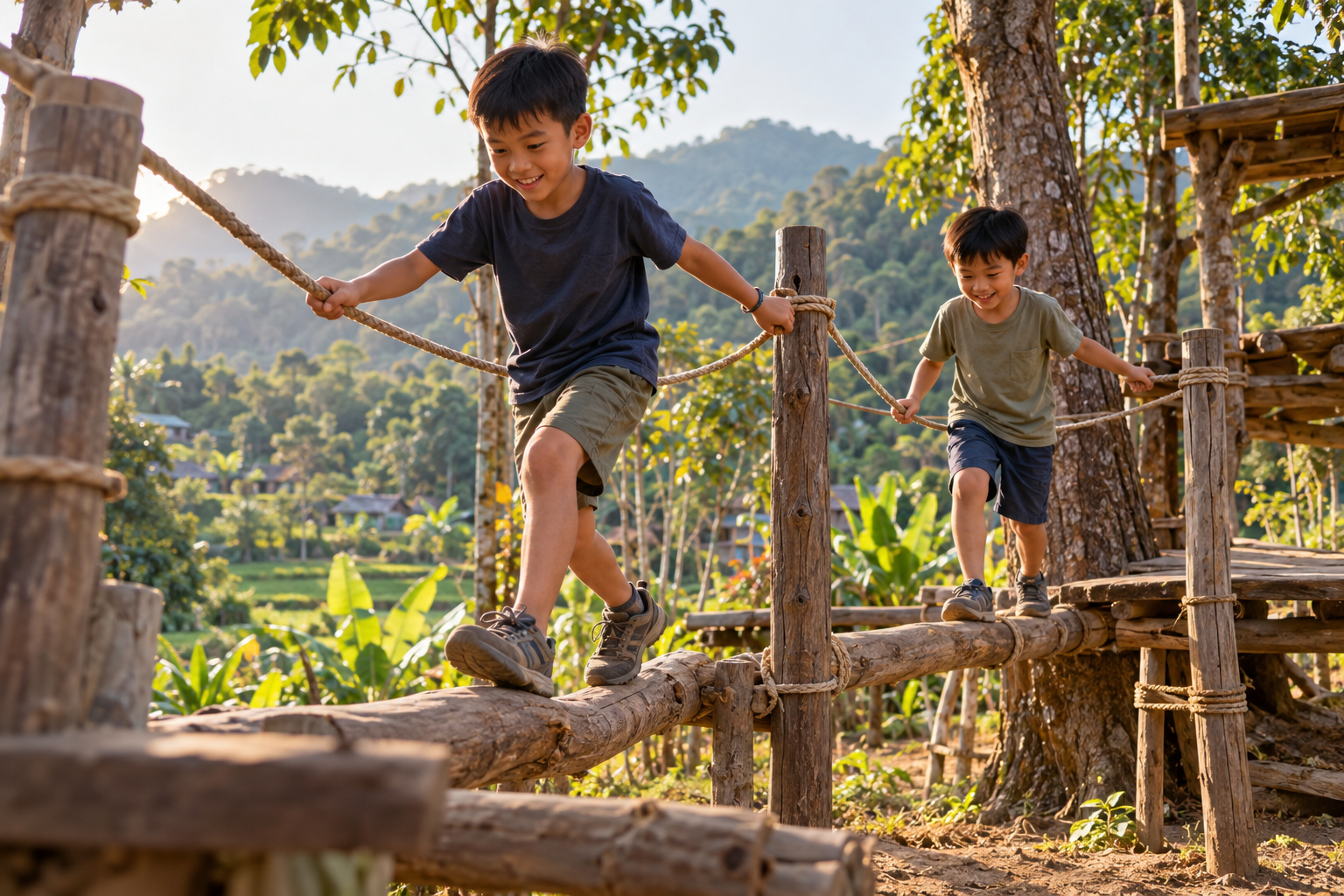
They learn through touching, climbing, carrying, balancing, building, running, falling and trying again. Movement is not necessarily a distraction from learning. It can be part of learning.
When a child builds something from wood, the mind and body work together. The child must measure, plan, hold the material steady, use the tool safely and adjust when something does not fit.
When children play football, swim or practise martial arts, they are not only exercising muscles. They are reading situations, making rapid decisions, controlling impulses and responding to other people.
These are mental skills expressed through the body.
What Muay Thai can teach
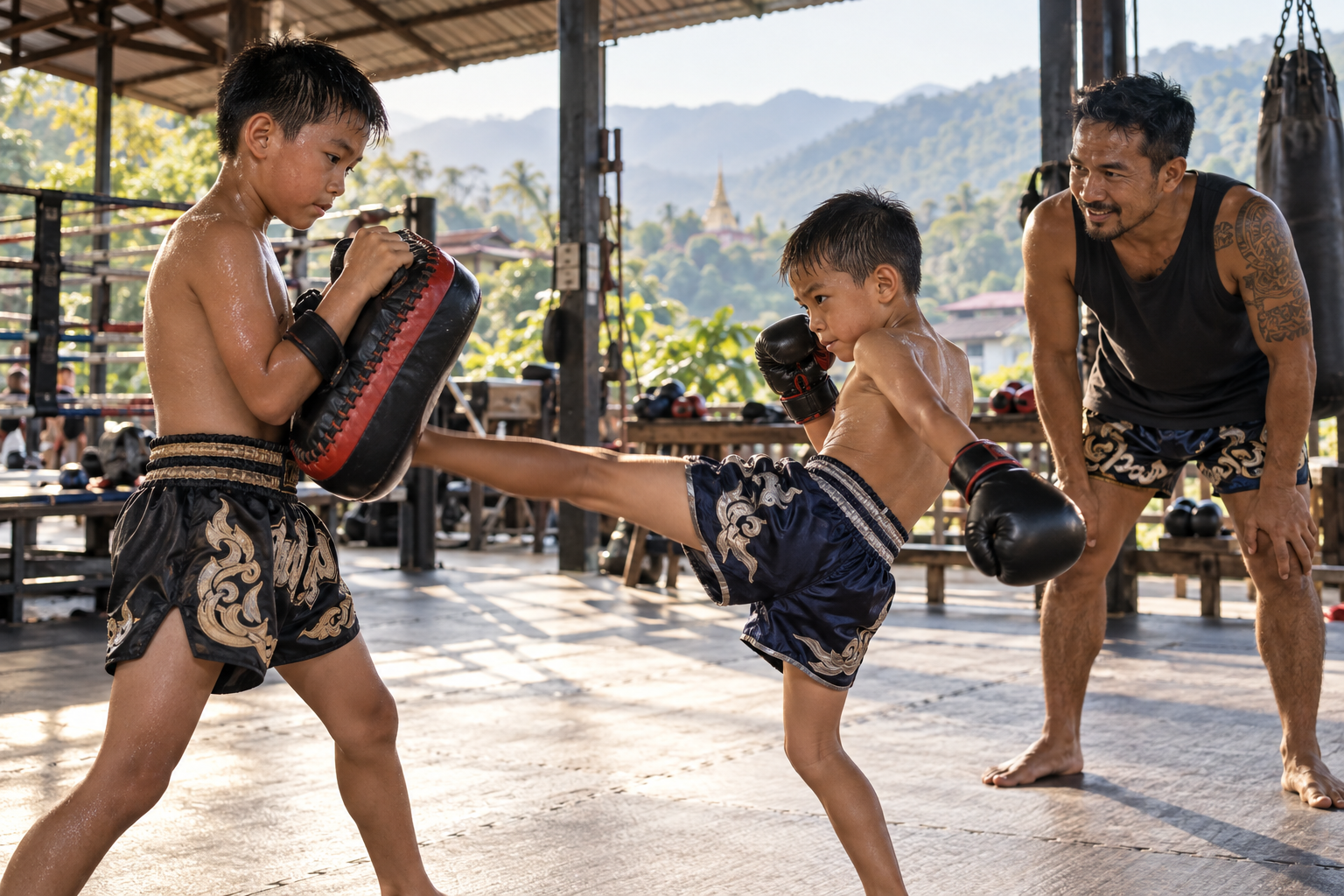
Since moving to Thailand, Muay Thai has become a powerful example for me.
From the outside, it may look like children are simply learning how to punch and kick. But a good Muay Thai class teaches much more.
A child learns balance and coordination. They learn that strength without control is dangerous. They practise responding calmly while tired. They discover that improvement comes through repetition, not instant success.
They must listen carefully, respect their trainer and control their power when working with a partner.
They also learn something that cannot be understood from a worksheet: discomfort does not always mean stop.
Sometimes the body is saying, “This is difficult.” The child learns to distinguish that feeling from genuine pain or danger. They take another breath, try one more time and discover that they are capable of more than they expected.
That experience builds confidence differently from praise.
The child does not merely hear, “You are strong.” They feel themselves becoming stronger.
The body teaches honest lessons
Academic work can sometimes hide effort. A child may copy an answer, use AI without thinking or memorise something long enough to pass a test.
The body is more honest.
You cannot pretend to have balance while standing on one leg. You cannot talk your way through ten difficult push-ups. You cannot become a good swimmer by reading the correct answers about swimming.
The body gives immediate feedback.
If your technique is wrong, you lose balance. If you begin too quickly, you run out of energy. If you do not pay attention, you miss the ball. If you practise consistently, something that was difficult becomes possible.
This teaches children about cause and effect, patience and responsibility. Their progress belongs to them because they can feel it.
Healthy food should be part of education
We teach children the names of organs and nutrients, but that does not necessarily teach them how to eat well.
A child can pass a test about carbohydrates, proteins and vitamins while having little understanding of what to choose for breakfast.
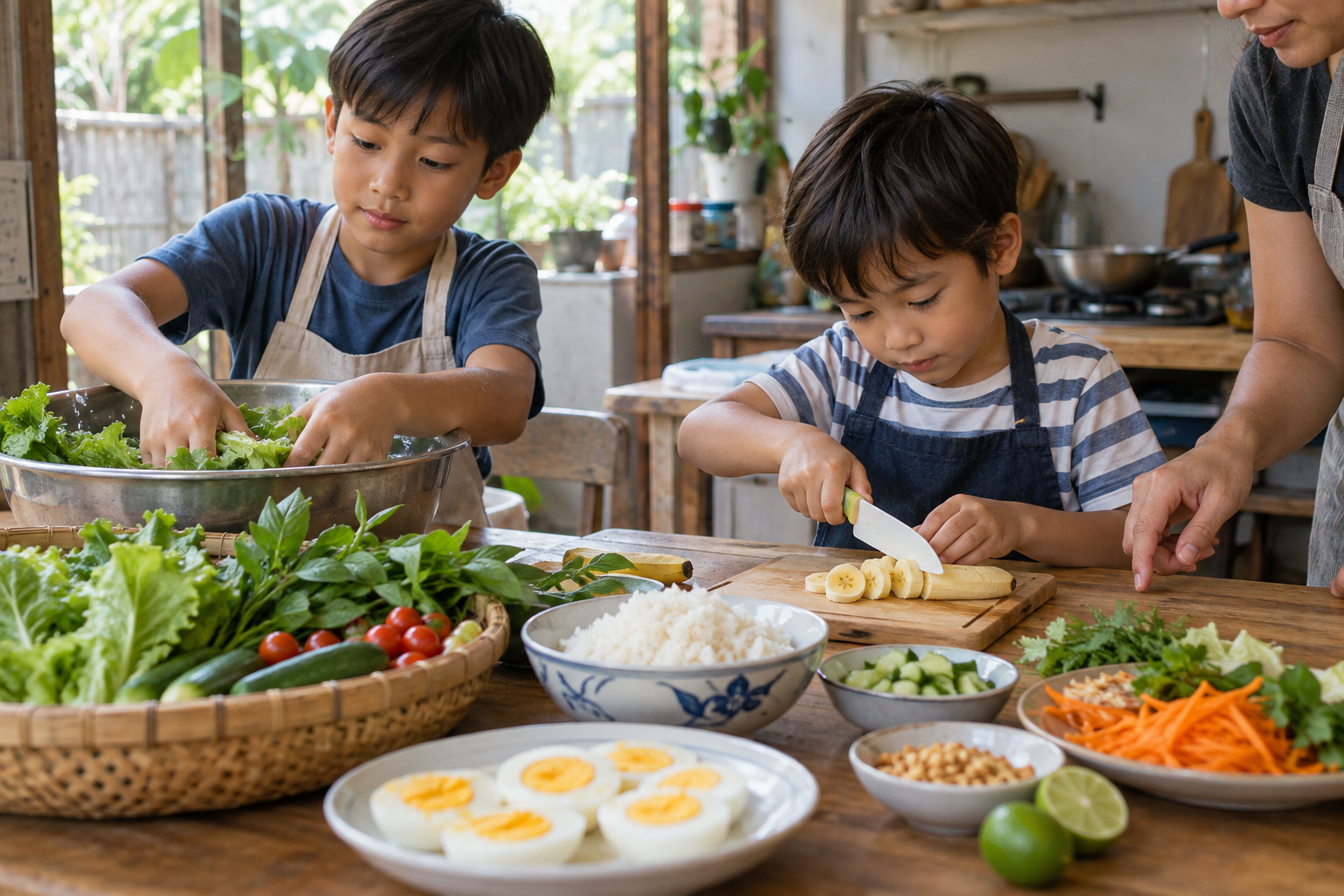
Healthy eating should not be reduced to adults saying, “Eat this because it is good for you.” Children can participate.
They can visit a market and compare fresh and processed foods. They can read labels and investigate how much sugar is hidden in drinks. They can plan a meal, calculate its cost, prepare it and notice how they feel afterwards.
Children can ask useful questions:
Why does one breakfast provide energy for longer than another?
Why are heavily processed foods so convenient and attractive?
What does protein do after physical training?
How much sugar is inside a drink that does not taste extremely sweet?
Why do our bodies need water?
How do food companies influence what children want?
Food connects biology, chemistry, culture, economics, agriculture and personal responsibility.
It is a perfect subject for real-world learning because every child eats every day.
Health is more than avoiding illness
We often think about health only when something goes wrong.
A child becomes overweight, struggles to sleep, experiences anxiety or lacks energy. Then adults start searching for a solution.
But health should not begin with repairing damage.
Children can learn to recognise the signals their bodies send before they become serious problems.
They can learn what insufficient sleep feels like. They can notice how their breathing changes when they become anxious. They can understand when their bodies need rest and when they are only resisting effort.
This does not mean children must become obsessed with fitness or food. That would simply replace one unhealthy pressure with another.
The goal is not to create perfect bodies. The goal is to help children build a respectful relationship with their own bodies.
Exercise should not be punishment
Some children learn to associate exercise with embarrassment.
They are chosen last for a team. They are compared with faster classmates. They receive a low grade because they cannot perform a movement that nobody properly helped them learn.
That is not physical education. It is physical judgment.
Movement should give children multiple ways to succeed.
One child may enjoy football. Another may prefer swimming, dancing, climbing, cycling, hiking or martial arts. Some children love competition; others become more confident through individual progress.
The purpose is not to force every child into the same sport. The purpose is to help each child discover forms of movement they may continue throughout life.
Screens make the question more urgent
Phones, tablets and computers are now part of childhood. They can support creativity, communication and learning. I do not believe the solution is to present every screen as an enemy.
But screens remove many natural reasons to move.
Entertainment arrives without walking anywhere. Friends appear without leaving the room. Questions can be answered without exploring. Boredom can be removed instantly.
That means families and schools must create more deliberate opportunities for physical life.
The answer is not only to take the device away. If we remove a screen without offering meaningful alternatives, we leave an empty space.
Give children something worth getting up for.
Let them train Muay Thai, build a camper, explore a forest, swim, cook, repair a bicycle, grow food or take part in a real mission.
The real world must become more compelling than the screen—not through fear, but through experience.
A complete education
At Learning of Life, I want education to develop the whole child.
Children need intellectual foundations. They should learn to read, write, calculate, investigate and communicate clearly.
But they should also learn to move confidently, eat wisely, sleep properly, handle physical challenges and care for their health.
A complete education should help a child answer questions such as: How does my body become stronger? What food gives me lasting energy? How do I remain calm under pressure? What is the difference between discomfort and injury? How do I recover after effort? How do I use strength responsibly? How can I build habits that protect my future health?
These are not secondary questions. They affect almost every day of a person’s life.
A child may forget a formula after leaving school. They will never leave their body behind.
Education should do more than prepare the mind for an exam.Train the mind. Train the body. Teach children how the two work together.
Before the answer, create the need to know
The best explanation often begins before we explain anything.
Read the previous story →