My children learn maths, English, science, geography and history. I want them to learn all of these things. But I keep coming back to another question: what does a child actually need to understand before becoming an adult?
Imagine finishing school with good grades but not understanding how interest works. Or how electricity reaches your house. Or what happens when you take out a loan. Or how to cook ten healthy meals.
Imagine not understanding how a supermarket makes money—or how to recognize when somebody, or an AI, is confidently telling you something that isn’t true.
You can know the capital of 50 countries and still have no idea how taxes work. You can solve an equation but struggle to negotiate. You can memorize the parts of a plant without ever growing one.
That’s not an argument against academic education. It’s an argument that education should go further.
Maths matters. But what can you do with it?
I don’t want to replace maths with “life skills.” I want children to understand why maths is so powerful.
Percentages become interesting when you’re calculating a discount.
Multiplication matters when you’re estimating how many plants fit inside a greenhouse.
Division matters when six children need to share 148 pencils.
Compound growth becomes fascinating when you discover what happens to money invested for 30 years.
Area matters when you’re designing a house. Speed matters when you’re travelling 1,200 kilometres by train.
Probability matters when somebody says something has a “90% chance” of happening.
The academic subject gives you the tool. Life gives you a reason to use it.
Money
This is probably one of the clearest examples. Children will spend their entire adult lives interacting with money. Yet how much do they understand about it?
Where does money come from? What are profit, interest and inflation?
Why does somebody borrow money? What are investments and assets?
Why do businesses fail? What are taxes? What does insurance actually do?
What is the relationship between money and value?
A child doesn’t need to become a financial expert. But money shouldn’t remain mysterious until their first salary arrives.
Food
Children eat several times every day. That makes food one of the greatest classrooms imaginable.
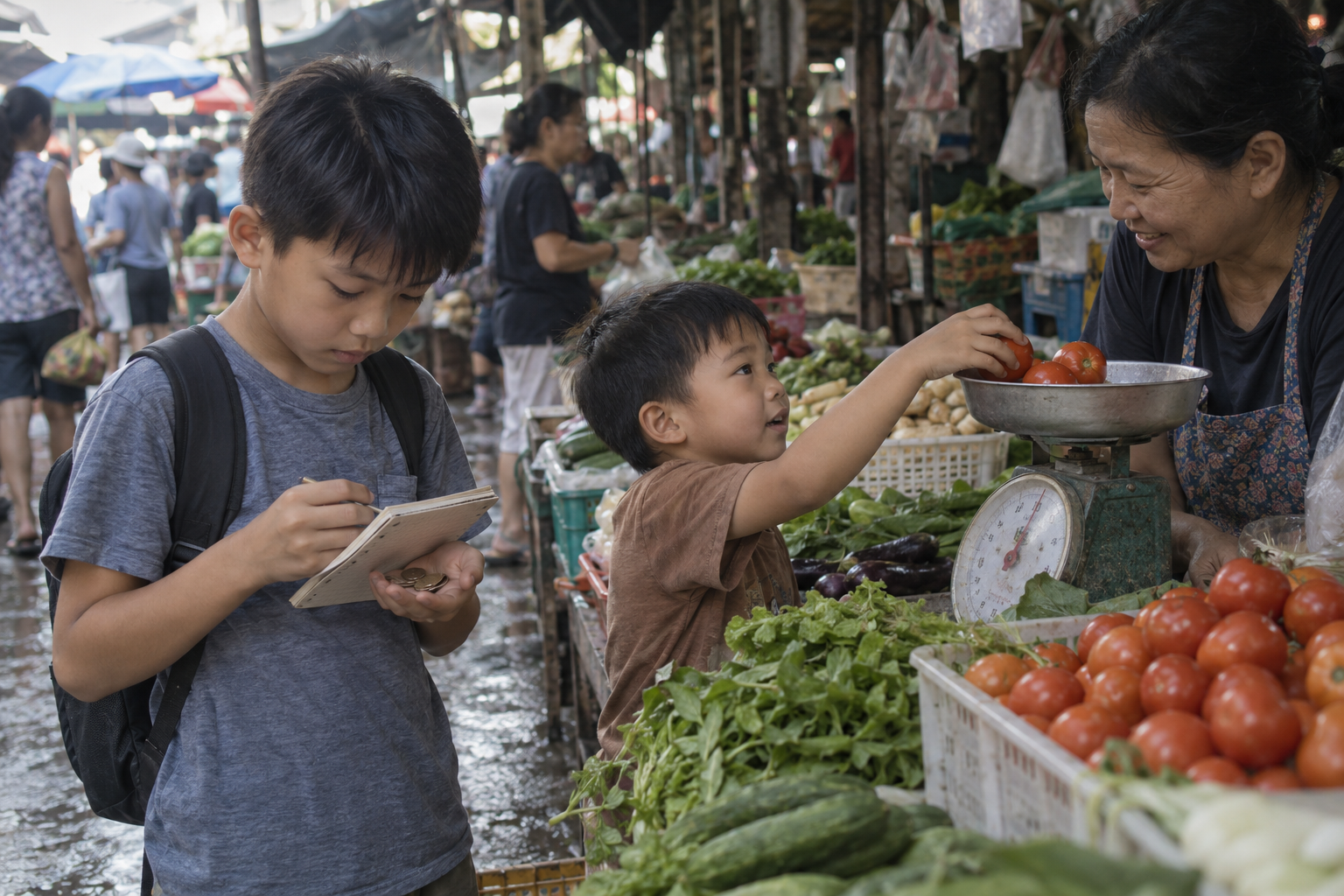
Where did this tomato come from, and how long did it take to grow?
Why does a plant need light? What are carbohydrates and calories?
What does cooking do chemically? How does refrigeration slow spoilage?
Why is one strawberry sweet and another almost tasteless?
Why can the same vegetable cost completely different amounts in different places?
Food connects biology, chemistry, agriculture, economics, geography, health and culture.
Then cook something. Now you’re learning measurement, temperature, timing, planning and responsibility too.
Health
Children should gradually learn how their own bodies work. Not because we want ten-year-old doctors, but because they only get one body.
Why do we sleep? What happens when we exercise?
Why does your heart beat faster when you run?
What are protein and sugar? Why do muscles become stronger?
What happens when we are stressed? How does our immune system work?
Why can medicine help us—and why can the wrong medicine be dangerous?
Understanding your body is not just biology. It’s a life skill.
Technology and AI
My children are growing up surrounded by technology that didn’t exist when I was their age. AI makes this even more important.
Children shouldn’t only learn how to operate technology. They should learn to question it.
How does a computer know something? What are data and algorithms?
Why can AI make mistakes? How can a photograph be fake?
Why does TikTok know which video you might watch next?
What information should you never share online?
What jobs could robots do? What can humans still do better?
When an AI gives you an answer, how do you know it’s true?
AI literacy may become as fundamental as computer literacy became for our generation.
People
This may be harder to test on an exam, but it’s difficult to imagine many skills being more important.
How do you listen and disagree without turning disagreement into a fight?
How do you recognize what somebody else might be feeling?
How do you ask for help, negotiate and apologize?
How do you work with somebody you don’t particularly like?
How do you recognize manipulation and become someone others can trust?
These aren’t soft skills. They’re human skills.
Failure
I would actually put failure on the curriculum—not as something we want children to experience unnecessarily, but as something they need to learn how to handle.
Build something that doesn’t work.
Lose a football match.
Try to sell something nobody wants.
Cook something terrible.
Plant something that dies.
Then ask: What happened? What did we expect? What actually happened? Why was there a difference? What should we change?
Try again.
Failure becomes much less frightening when you learn that it contains information.
Thinking
This might be the most important subject of all. Not what to think. How to think.
What evidence do you have? What are you assuming?
Could there be another explanation? What would prove you wrong?
Are you confusing correlation with causation?
How likely is this really? Who benefits if you believe it?
Is this information reliable? What information are we missing?
How do you know?
These questions become increasingly important in a world where children will have access to unlimited information—and unlimited misinformation.
The physical world
There’s another category I think we’ve gradually become disconnected from: how does the world around us actually work?
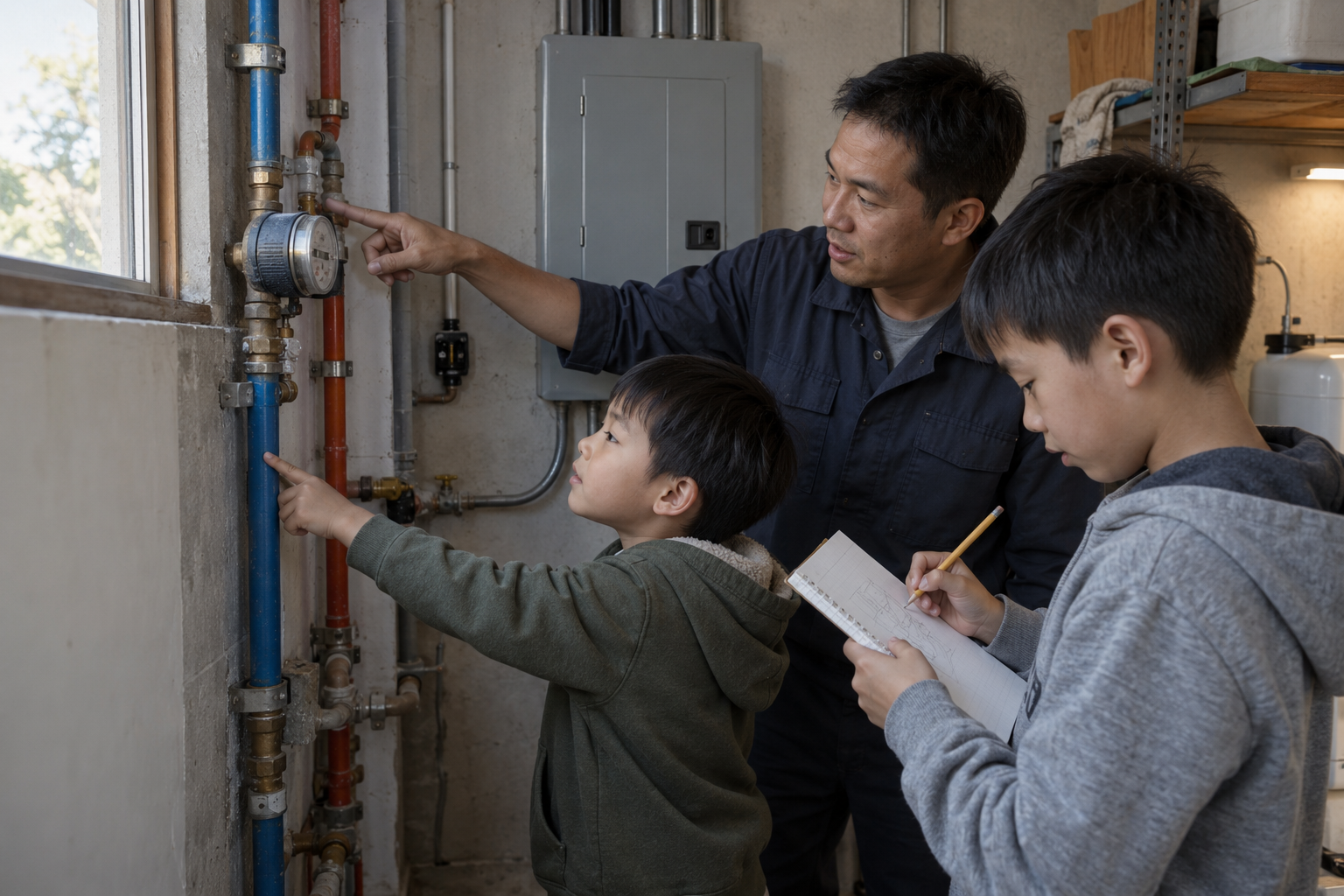
Turn on a tap. Where did the water come from?
Flush the toilet. Where does it go?
Switch on a light. Where was the electricity generated?
Throw something away. Where does it end up?
How does an engine turn fuel into movement?
How did thousands of supermarket products arrive there? How was your house built?
Children don’t need to become plumbers, electricians, farmers and engineers. But they should understand something about the systems keeping them alive every day.
Society
Then there is the enormous machine we all live inside.
Why do we have governments? What are taxes used for? What is a law?
What does a company actually do? Why do countries trade?
Why do currencies have different values?
Why are some countries richer than others?
Why do wars happen? Why do people migrate? Why do cultures develop differently?
These questions connect history, economics, politics and geography to the world children see around them.
Practical independence
There should also be things you simply know how to do.
Cook. Clean. Use basic tools.
Read a map. Plan a journey. Create a budget.
Make an appointment. Organize your time.
Understand basic first aid. Pack your own bag.
Look after another person. Look after yourself.
These things aren’t glamorous. That’s precisely why they’re easy to overlook. But independence is built from hundreds of small abilities.
And then there is curiosity
Perhaps we don’t actually need to teach this one. Children already have it.
Why?
But why?
What happens if…?
How does that work?
Where does that go?
Somewhere along the way, education can accidentally turn this around. Adults ask the questions. Children provide the answers. Then we grade them.
I would like Learning of Life to protect that original instinct. The child should keep asking the questions.
Education as a tree
This is why I increasingly think about education as a tree.
The roots matter: reading, writing, mathematics, science and language. Without strong roots, the tree struggles to grow.
But the roots aren’t the entire tree.
From them grow branches: money, health, technology, food, relationships, business, creativity, culture, resilience, practical skills and critical thinking.
Every new experience can create another branch.
A trip on a train. A failed experiment.
A conversation with a grandparent. Growing a tomato.
Visiting a factory. Starting a tiny business.
Travelling to another country. Building something. Making a mistake.
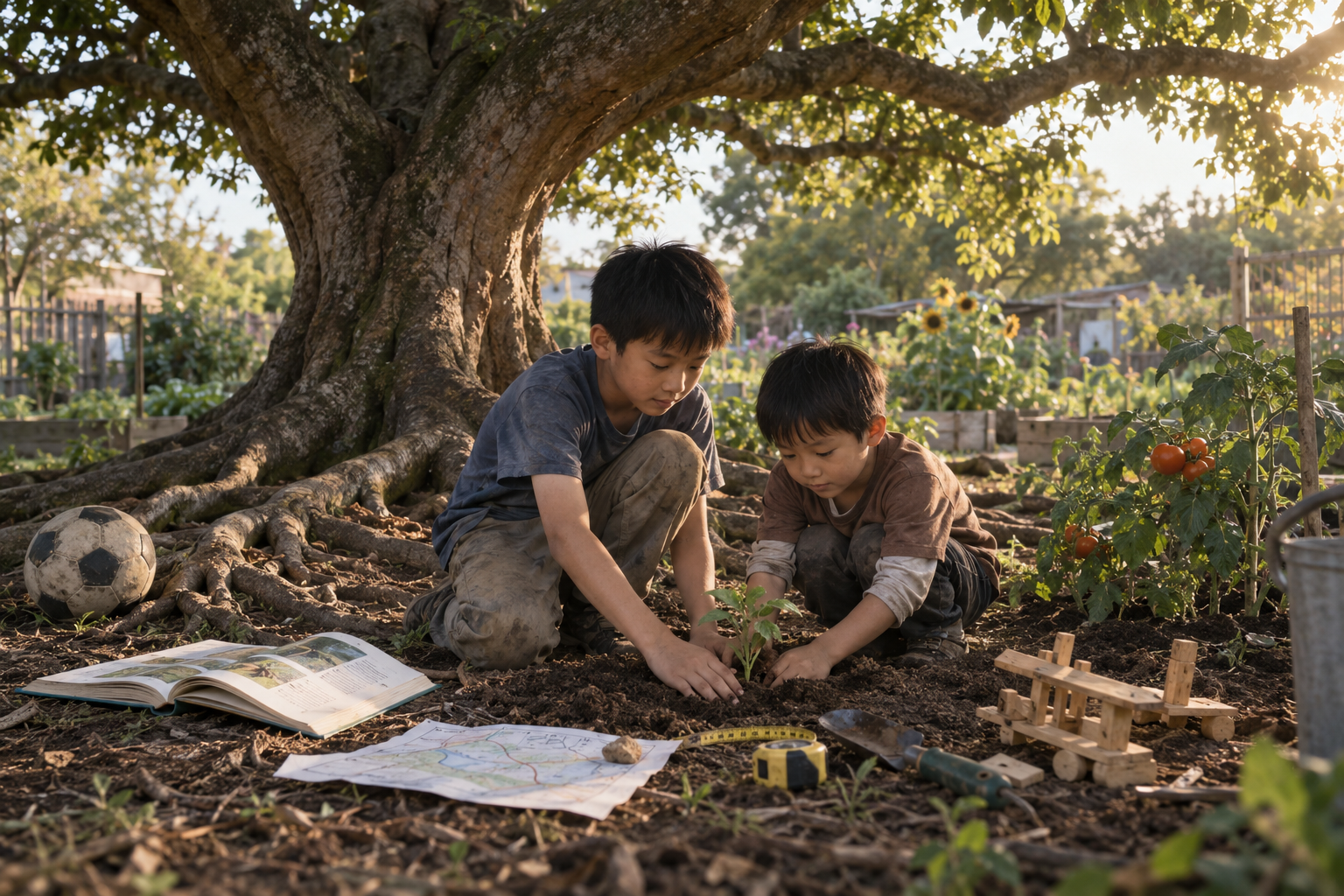
As the child grows, the tree becomes more complicated. And that’s exactly what should happen.
Education shouldn’t be about finishing a list of subjects. It should be about gradually building a model of the world—and understanding your place within it.
We won’t be able to teach our children everything they will need. The world will change too quickly for that.
But perhaps we can give them something more valuable:
Strong roots. The curiosity to keep growing new branches.And the confidence to explore what they don’t yet understand.
That’s Learning of Life.
The world is our classroom.
What should AI teach?
Read why an AI teacher should not simply finish homework, but help children ask, test and think.
Read the previous story →