AI can answer almost any homework question my children receive. That worries me—but probably not for the reason you think.
I don’t think we should keep AI away from children. I think we should do the opposite.
We should teach them how to use it properly.
If we use AI simply to make homework easier, we may be wasting one of the biggest opportunities education has ever had.
The real opportunity isn’t an AI that gives every child the answer. It’s an AI that understands when not to give the answer.
Imagine a child asks: Why does a ship float?
An AI can explain buoyancy, density and Archimedes’ principle in seconds. The child can copy the answer. Homework finished.
But did any real learning happen?
Now imagine Professor LOL responds differently:
“A small metal coin sinks. But an enormous steel ship floats. How can that be?”
The child guesses. Professor LOL doesn’t immediately say whether the answer is right. Instead: “Let’s test it.”
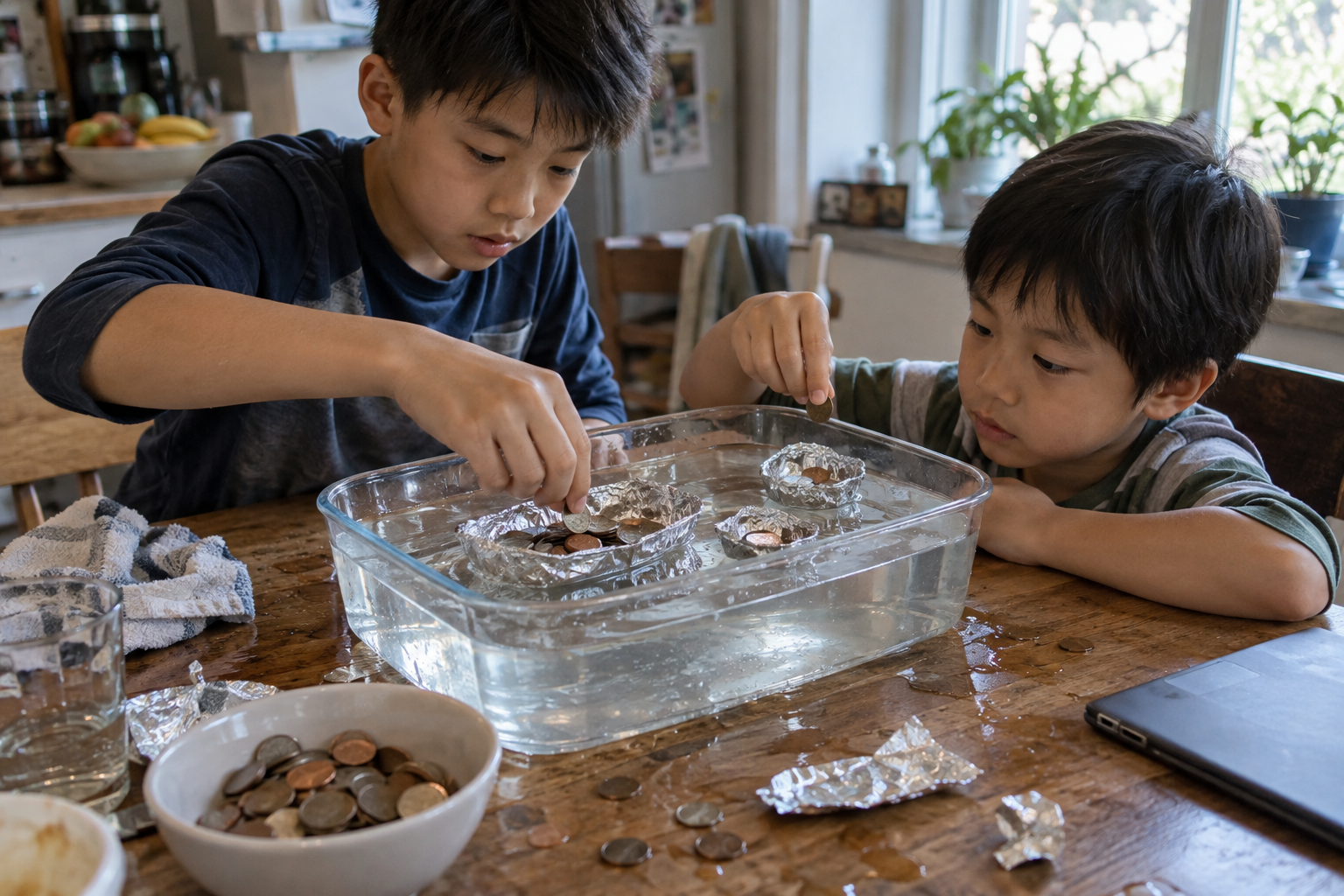
Find some aluminium foil and build three different boats.
Put them in water and add coins one at a time.
Which boat holds the most? Why?
Change the shape. Try again.
Suddenly the child isn’t consuming an explanation. They’re investigating a mystery.
Only afterwards do we introduce displacement, density and buoyancy.
The AI didn’t replace the learning. It created the learning.
The problem isn’t AI. It’s how we use it.
We’re going to have to make a decision about AI in education.
One approach is to fight it: block ChatGPT, detect AI-written homework and tell children not to use it.
I don’t think that will work for very long. AI is going to be part of the world our children grow up in.
So instead of asking, “How do we stop children using AI?”, I’d rather ask:
How do we teach children to think better with AI?
Those are completely different questions.
AI should ask more questions than it answers
This has become one of the central ideas behind Learning of Life.
Imagine a child asks: “Why is the sky blue?”
Instead of immediately explaining it, the AI might ask:
What do you think?
Is the sky always blue? What colour is it at sunset?
What happens when there are clouds?
Would the sky look the same from the Moon?
How could we test some of these ideas?
Now the child has to think. And that matters.
Curiosity often begins in the small gap between “I don’t know” and “I want to find out.”
If AI fills that gap instantly every time, we may accidentally remove something extremely valuable.
Every child could have a different teacher
My children are different ages. They learn differently, have different interests and struggle with different things.
Yet traditional education often has to teach many children the same subject, at approximately the same speed, in approximately the same way. That’s understandable. One teacher cannot continuously create 25 completely different lessons.
AI potentially can.
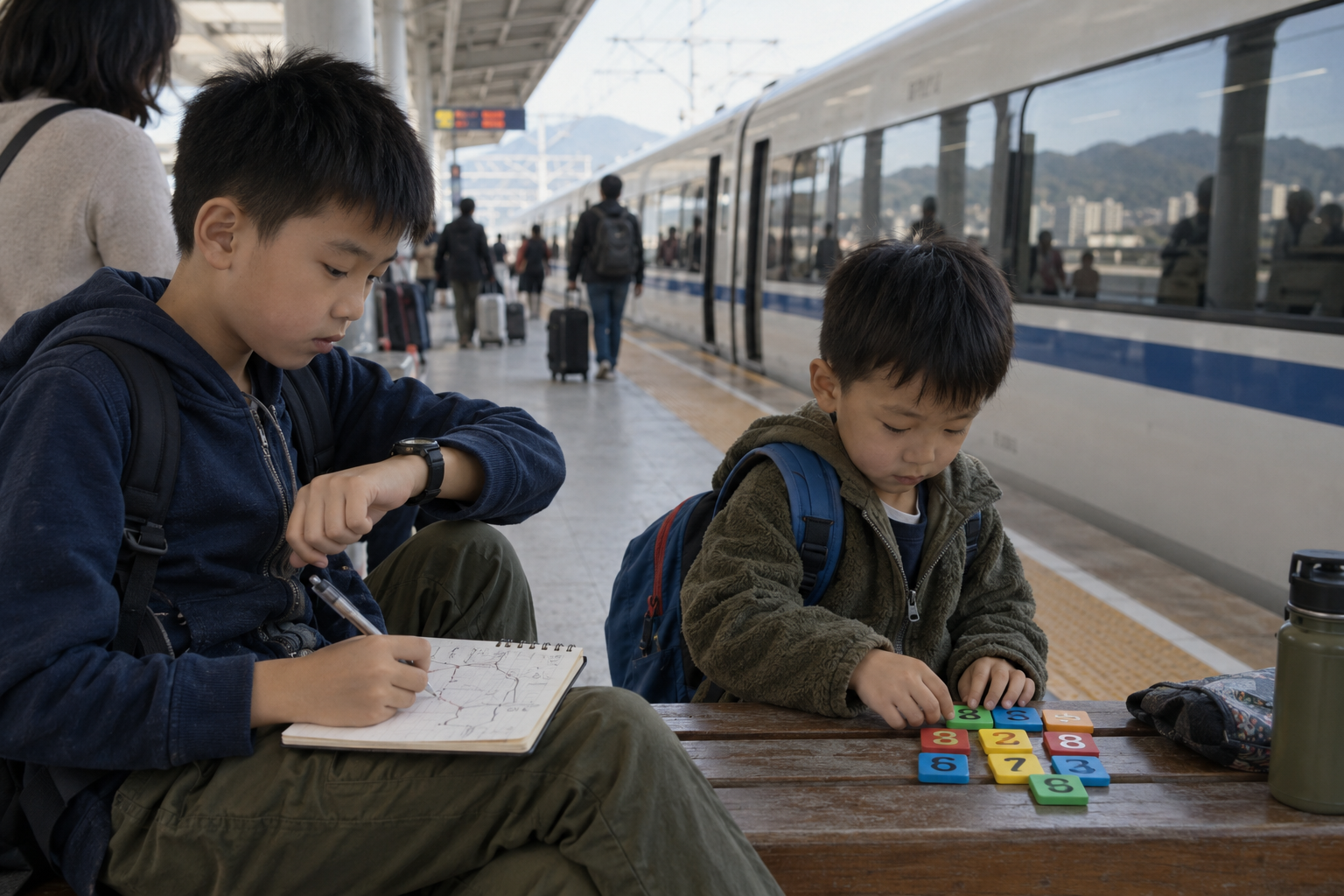
Imagine two children standing beside the same high-speed train.
For a seven-year-old: “The train travels 300 kilometres in one hour. How far can it travel in two hours?”
For a ten-year-old: “If the train travels 1,200 kilometres at an average speed of 300 km/h, how long should the journey take? Why might the real journey take longer?”
Same train. Same experience. Different learning challenge.
Don’t move on because the timetable says so
Personalization also means recognizing when a child doesn’t actually understand something.
Suppose a child gets six multiplication questions wrong. The normal system may continue because tomorrow’s lesson is already planned. An AI tutor doesn’t need to.
It can notice the pattern. Maybe multiplication isn’t actually the problem. Maybe the child doesn’t understand place value.
Go backwards. Try another explanation.
Use physical objects. Ask a simpler question.
Try again. Then increase the difficulty.
The objective shouldn’t be: “We finished today’s worksheet.”
The objective should be: “You understand this.”
Children shouldn’t spend their lives talking to screens
When people hear “AI education,” it’s easy to imagine children spending even more time sitting behind tablets.
That’s almost the opposite of what I want.
AI should help children spend more time in the real world, not less.
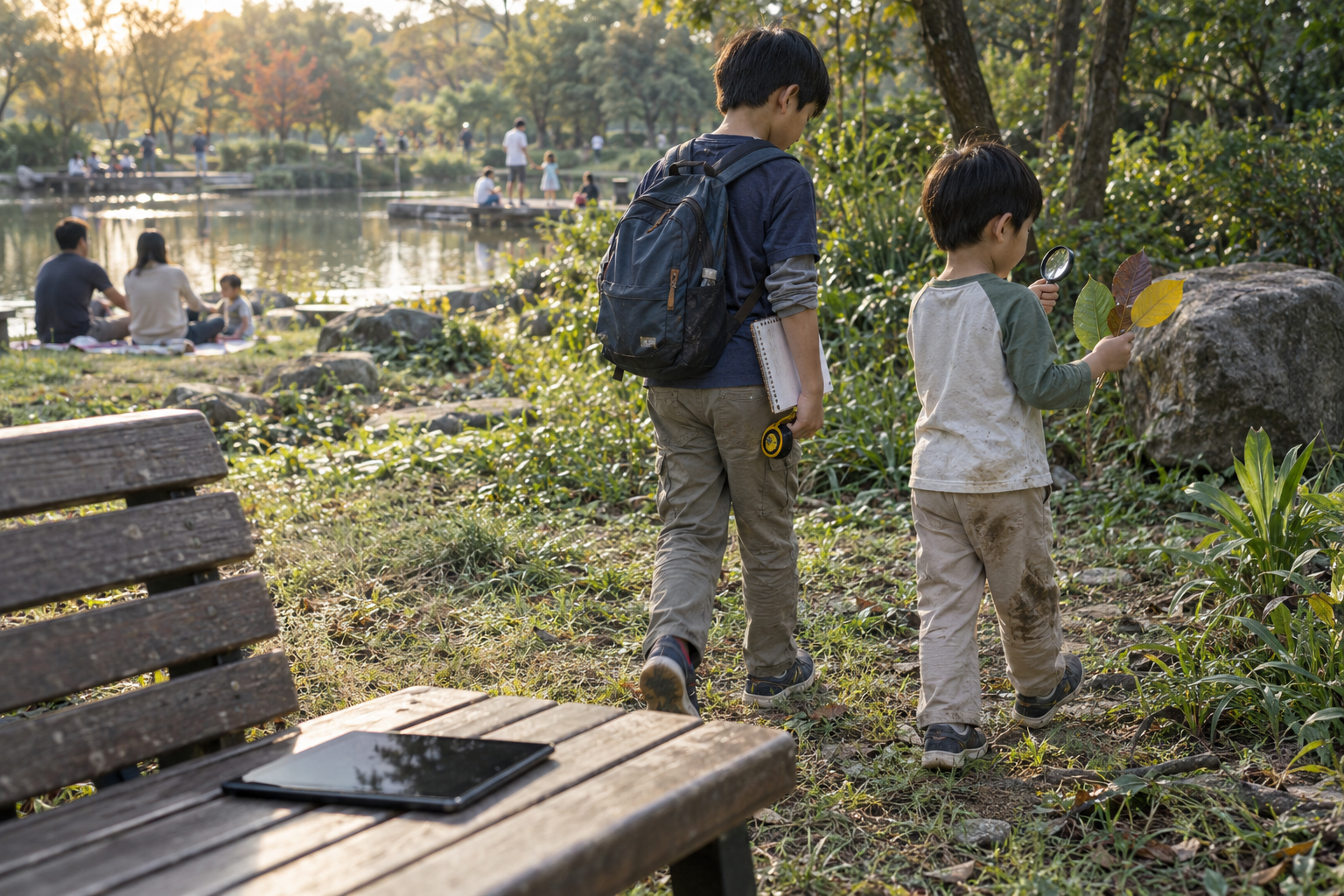
Professor LOL might introduce a question on a screen. But then:
Go outside. Find three leaves. Measure the swimming pool.
Interview the shopkeeper. Buy something with ¥20.
Find where your drinking water comes from.
Cook an egg three different ways. Grow a plant.
Build a boat. Get something wrong. Come back and explain what happened.
The technology stays in the background. Life becomes the lesson.
AI should know when to disappear
Perhaps that’s the strange part of my vision for AI education.
The better the AI becomes, the less visible it should sometimes be.
It shouldn’t become the child’s world. It should point toward the world.
Professor LOL doesn’t need to know everything for the child. Professor LOL needs to know when to say:
“I don’t want to tell you. Let’s go find out.”
That might be one of the most valuable sentences an AI teacher can learn.
Knowing the answer isn’t enough anymore
My children are growing up in a world where information is becoming incredibly cheap. AI can already write, calculate, translate, summarize and explain at extraordinary speed.
So education can’t only be about producing answers. Children will need to learn something harder:
How do I know whether this answer is true?
What evidence supports it? What assumptions are being made?
What question should I ask next?
Can I explain this in my own words?
Can I use this knowledge to solve a real problem? What happens if I’m wrong?
Those skills become more important, not less, in an AI world.
That’s what we’re trying to build
Learning of Life isn’t about replacing teachers with AI. And it isn’t about replacing school with a chatbot.
We’re experimenting with something different: a system where structured academics, AI and real-world experiences work together.
AI identifies what a child understands and adjusts the difficulty.
It remembers unanswered questions and challenges assumptions.
It connects subjects, creates missions and sends the child back into the world.
Ultimately, I don’t want my children to become excellent at answering questions on a screen.
I want them to become excellent at understanding the world around them.
AI can help us do that—but only if we remember:
The answer isn’t the destination.It’s the beginning of the next question.
“Let’s go find out.”
The world is our classroom.
School or the world?
Read why children should not have to choose between academic foundations and real-world experience.
Read the previous story →