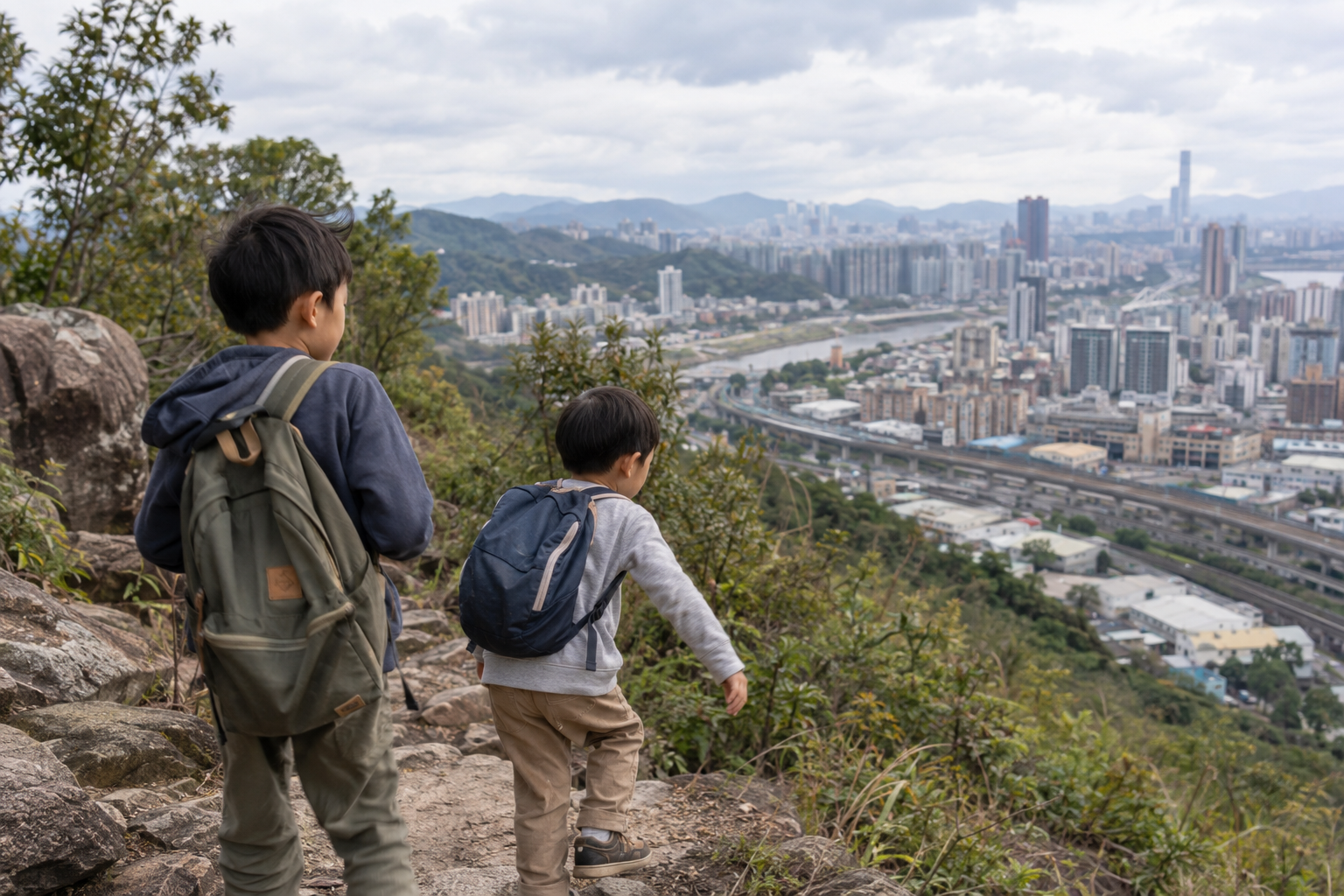
I have two sons, 6 and 10 years old. Like most parents, I want them to be good at maths, English, science and reading. I want them to have a strong academic foundation.
But I also want them to understand the world they are growing up in.
And increasingly, I wonder why we treat these as two different things.
Why should learning maths mean sitting at a desk?
Why should geography start with a textbook instead of a train journey?
Why should children learn about money without ever running a small business?
Why should they learn about technology without seeing a robot?
Why should education be connected to one school, one building and one place?
The world is already full of classrooms
For the past years, our children have lived and learned in very different environments.
In Bali, much of their world was nature, freedom and community.
In China, everything changes. They see enormous cities, high-speed trains, factories, robots, different food, a different language and a completely different culture.
Soon, another chapter will begin in Thailand.
I don’t see these changes as interruptions to their education.
I see them as part of their education.
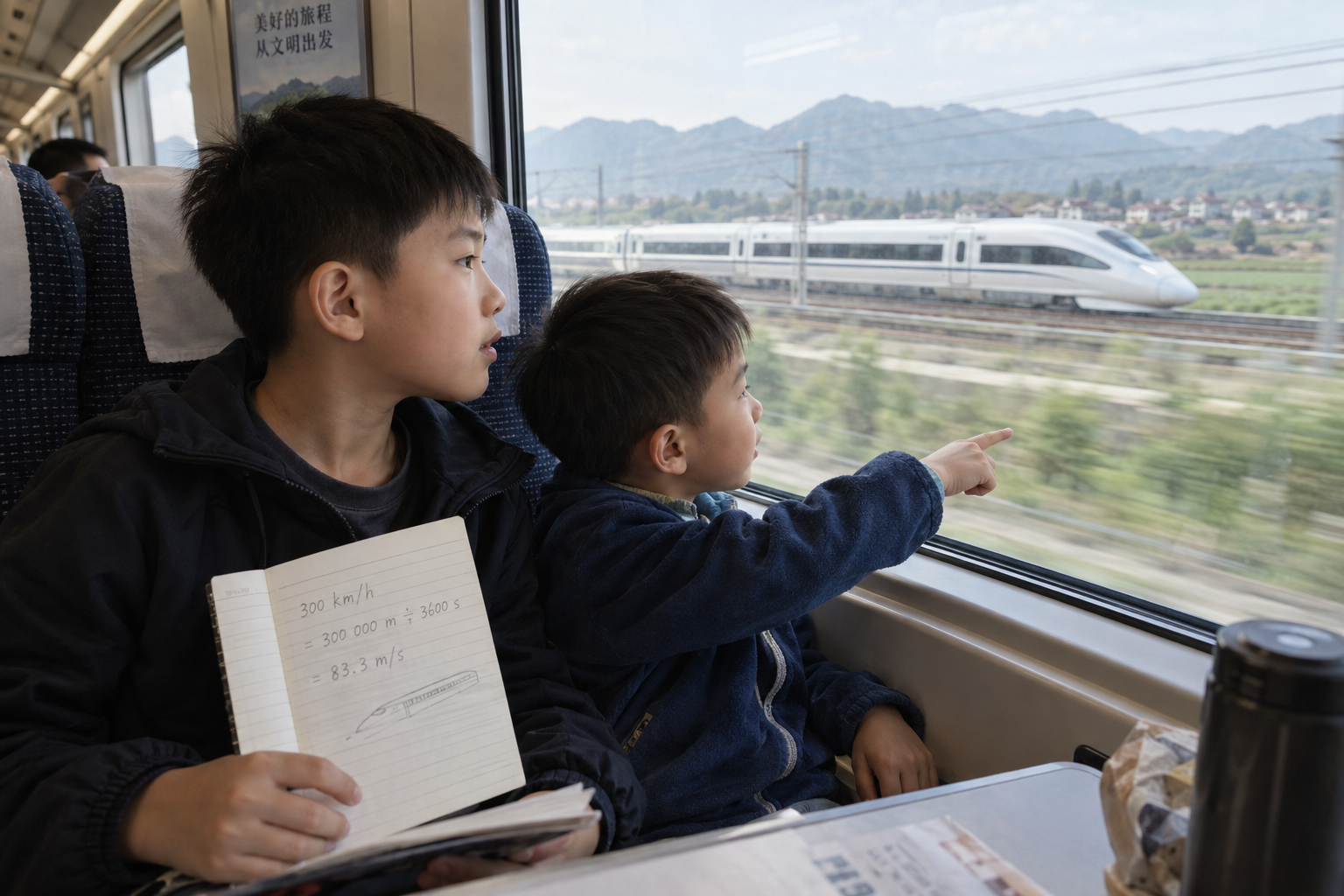
A high-speed train isn’t just transportation.
Why can it travel 350 km/h?
Where does the electricity come from?
Why did China build such a huge railway network?
How much does a train cost? Would flying be faster?
How does magnetic levitation work?
Suddenly, one train journey contains maths, physics, geography, economics, engineering and environmental science. More importantly, the questions came from something the children actually experienced.
But travelling isn’t an education system
This distinction is important. Taking children around the world doesn’t automatically mean they are learning.
Children still need structure. They need maths and language. They need to read and write well. They need scientific knowledge, repetition, practice and increasingly difficult challenges.
That’s why I don’t believe the answer is simply to replace school with travel.
I think we can combine the best parts of both.
A hybrid way of learning
This is the idea behind Learning of Life.
Imagine that part of the day is highly structured: maths, English, science, reading and writing.
AI can help personalize this learning. If a child understands fractions quickly, there is no reason to spend another week repeating them. If multiplication is still difficult, don’t move on just because the class timetable says it is Tuesday.
The objective should be mastery, not simply completing lessons.
Then use the rest of the world as the laboratory.
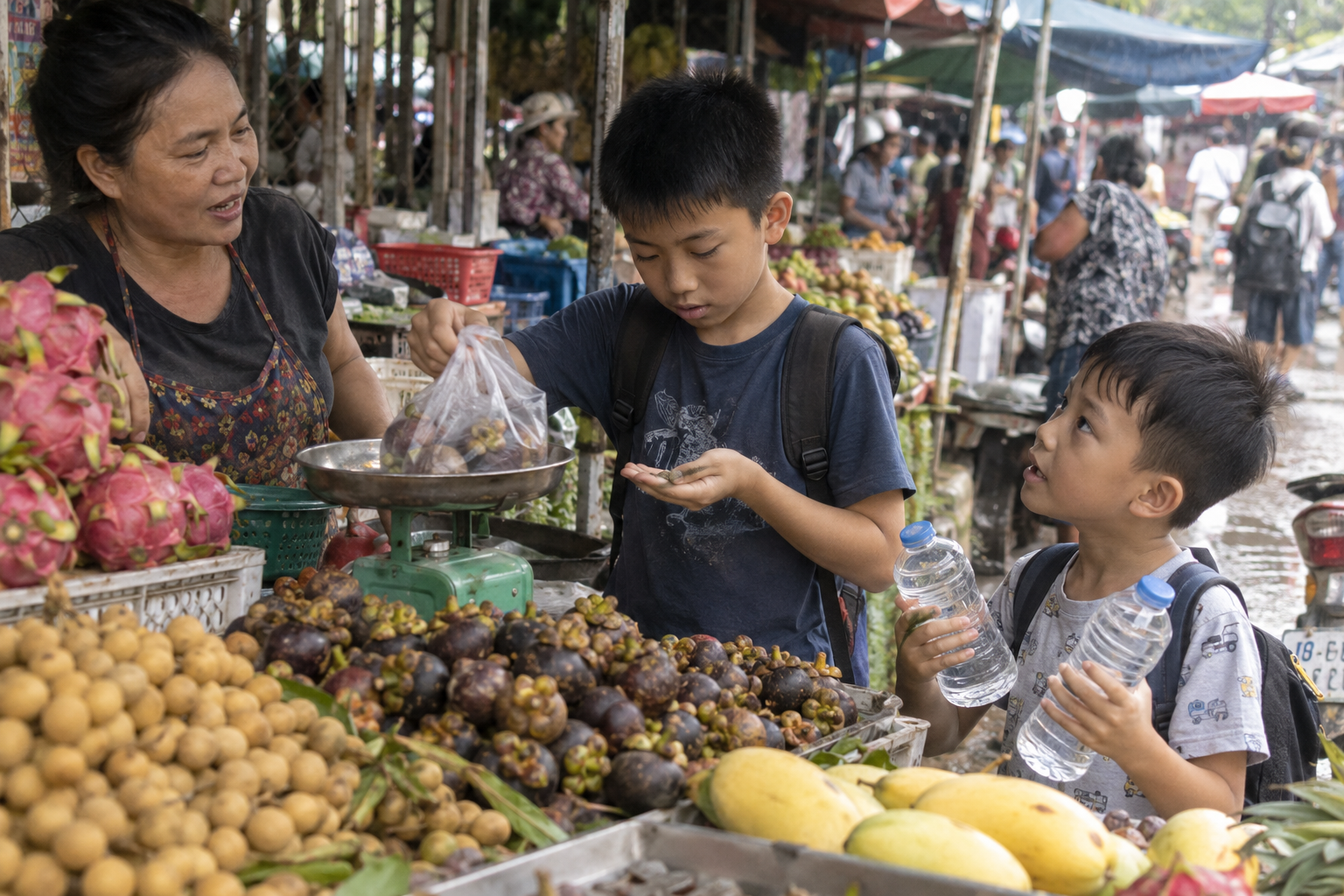
Go outside. Visit a market. Take a train.
Cook something. Build something. Grow something.
Interview somebody. Visit a company. Explore a museum.
Make a mistake. Try again.
One experience can contain ten subjects
Think about something as ordinary as buying a bottle of water.
Where did the water come from, and how was it cleaned?
Who owns the company? Why does one bottle cost ¥2 and another ¥10?
What is plastic made from, and where does the bottle go after we throw it away?
How much water does a person need? How much does a tomato plant need?
Why are some countries running out of fresh water?
Now we’re studying chemistry, biology, economics, agriculture, geography, sustainability and mathematics—all from one bottle of water.
This is much closer to how life actually works. Life doesn’t arrive divided into 45-minute subjects.
The world our children are entering is changing incredibly fast
AI makes this question more urgent.
Children growing up today will enter a world very different from the one their parents entered. Simply memorizing information will become less valuable when an AI can retrieve, translate, calculate and explain information almost instantly.
That doesn’t mean knowledge becomes unimportant.
It means what children do with knowledge becomes more important.
Can they ask a good question and determine whether an answer makes sense?
Can they solve a problem they’ve never seen before?
Can they work with other people, understand money and communicate?
Can they recognize when they’re wrong and adapt when the world changes?
Can they use AI without becoming dependent on it?
These are not secondary skills. They may become some of the most important skills our children can develop.
AI shouldn’t replace curiosity
I’m particularly interested in what happens when AI becomes part of education.
The easiest version is also probably the worst version: a child receives homework, asks AI for the answer, copies it and finishes faster. Nothing meaningful has happened.
I want to turn that around. Instead of AI answering every question, AI should sometimes ask the questions.
Why do you think that happened?
How could you test it?
What evidence would change your mind?
Can you explain it to a seven-year-old?
Where could we see this in the real world?
Used properly, AI could help us create something education has rarely been able to provide: a learning path that continuously adapts to one individual child.
This is an experiment
I don’t pretend that we have solved education.
Learning of Life is an experiment that we’re building while our children are growing up. Some ideas will work. Some won’t. We will change things. The children will probably teach us as much about the system as we teach them.
But there is one principle I increasingly believe in:
Children shouldn’t have to choose between learning about the world and experiencing it. They should do both.
Learn the mathematics. Then find the mathematics in real life.
Learn the science. Then experiment with it.
Learn geography. Then go somewhere.
Learn economics. Then buy something, sell something and understand where the money went.
Learn about technology. Then meet the people and machines building the future.
And keep asking questions.
Because perhaps the biggest classroom we can give our children has been around us all along.The world is our classroom.
What should education become?
Read how Learning of Life aims to combine academic discipline, curiosity and experiences from Bali and China.
Read the previous story →