My children learn history.
They learn about ancient civilisations, inventions, wars and the decisions that shaped the world.
I want them to understand those things.
But I also want them to look in the other direction.
What is changing now—and what could that mean for their lives?
They will grow up in a world shaped by AI, robotics, changes in energy, new ways of producing food and events nobody can confidently predict today.
We cannot give them a complete set of instructions for that world.
But we can help them learn how to notice change, question it, prepare for it and find opportunities within it.
For me, that is one of the most important purposes of education.
The future deserves its own subject
In Learning of Life, I want Future Studies to be a main curriculum subject, alongside maths, English, science, geography and history.
It should have dedicated time, clear learning goals and practical activities.
Children should learn to ask:
What is changing?
What is driving that change?
What might happen next?
What could prevent it?
Who might benefit? Who might struggle?
What could we do with this knowledge?
These questions connect academic subjects to decisions children will eventually make about work, money, technology and how they want to live.
History helps them understand how we arrived here.
Future Studies helps them explore where we might go.
Start with something they can see
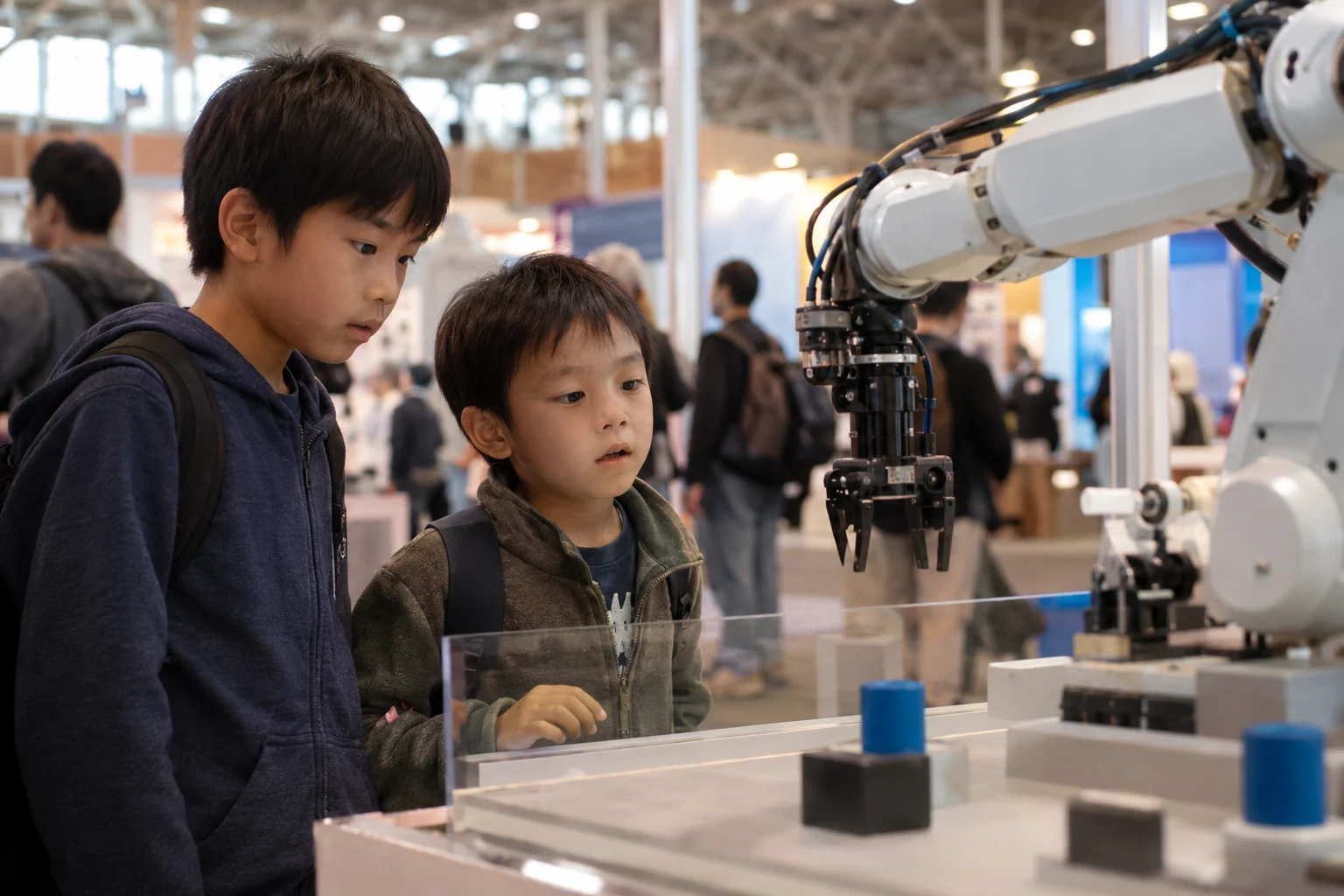
When I took my sons to the robot exhibition in Beijing, we saw machines performing different tasks.
The immediate questions were interesting enough.
How does it move?
How does it keep its balance?
How does it know what to do?
But there was another conversation waiting behind those questions.
What happens if machines like this become cheaper?
Where could they be useful?
What would still be difficult for them?
Could a robot help someone who struggles to walk? Pick ripe tomatoes? Repair something in a dangerous place?
And if you wanted to help build that future, what would you need to learn?
Suddenly maths, engineering, biology, business and ethics become connected.
The children have a reason to investigate them.
Prediction is a skill. Certainty is a trap.
I don’t want to teach my children that they can know exactly what will happen.
People make confident predictions all the time. Confidence alone tells us very little about whether they are right.
A child studying the future should learn to say:
“I think this might happen because…”
Then explain the evidence.
They should also ask:
What am I assuming?
What evidence would change my mind?
What else could happen?
Suppose we imagine that robots will become common in homes.
One possible future is that they become affordable and useful.
Another is that they remain expensive and unreliable.
A third is that people accept them for some jobs but reject them for others.
Each possibility raises different questions.
The skill is to think through possibilities without becoming attached to one story.
Learn to notice what is changing
Some changes are easy to see.
A new machine appears in a shop.
A service becomes available on a phone.
A task that used to take an hour takes a few minutes.
Other changes are quieter.
A family changes what it buys.
A farmer changes how crops are grown.
A community begins to use less water.
Children can practise noticing these things.
At a supermarket, we might ask:
What do people do here that a machine could help with?
Which tasks involve judgement, trust or understanding another person?
At a greenhouse:
What does the grower measure?
What happens when electricity becomes more expensive?
What could make the greenhouse use less water?
During a train journey:
Why did people invest in this railway?
How might it change the places it connects?
These conversations help children see the world as something people are continually changing through choices, inventions and experiments.
Change creates problems—and opportunities
I work in horticulture, where questions about the future quickly become practical.
How can we produce food with less water?
What happens when labour is difficult to find?
Which tasks could be automated?
Which new technology is useful, and which is an expensive distraction?
There is rarely one simple answer.
You have to understand the problem, compare possibilities and decide what is worth testing.
I want my children to develop that habit.
When they see a change, I don’t want their only question to be:
“Will this affect me?”
I also want them to ask:
“Could I help solve a problem this creates?”
If a community needs to save water, what could they measure or improve?
If someone finds a new technology confusing, could they help explain it?
If a task becomes easier to automate, what other needs remain?
Finding an opportunity begins with understanding what somebody needs.
Adaptation needs practice
We often tell children to be flexible.
But they need opportunities to experience what that means.
Imagine they start a tiny business selling something they made.
They calculate the materials, choose a price and find a few customers.
Then something changes.
The materials cost more.
Customers ask for a different design.
Another child sells a similar product.
Their original plan no longer works as expected.
Now what?
They could speak to customers.
Change the product.
Find a different material.
Improve the quality.
Or decide that the idea is no longer worth pursuing.
That is a lesson in adaptation.
They are learning that changing a plan can be a thoughtful response to new information.
Persistence matters. So does knowing when to change direction.
What Future Studies could look like at six and ten
My sons can explore the same change at different levels.
For my younger son, the starting point might be:
“Draw a machine that could help someone. What would it do? What might go wrong?”
He could build a cardboard model and explain it.
For my older son, we could go further:
“Who would use it? How do they solve this problem today? What would your machine need to do better? How could you test whether people want it?”
Neither child needs to produce a perfect invention.
The value comes from observing a need, imagining a response and discovering what they overlooked.
As they grow, we can introduce more demanding ideas: probability, costs, trade-offs, unintended consequences and the difference between a temporary fashion and a lasting change.
Give the future a place in the week
Our five-day Learning of Life model gives these ideas a practical structure.
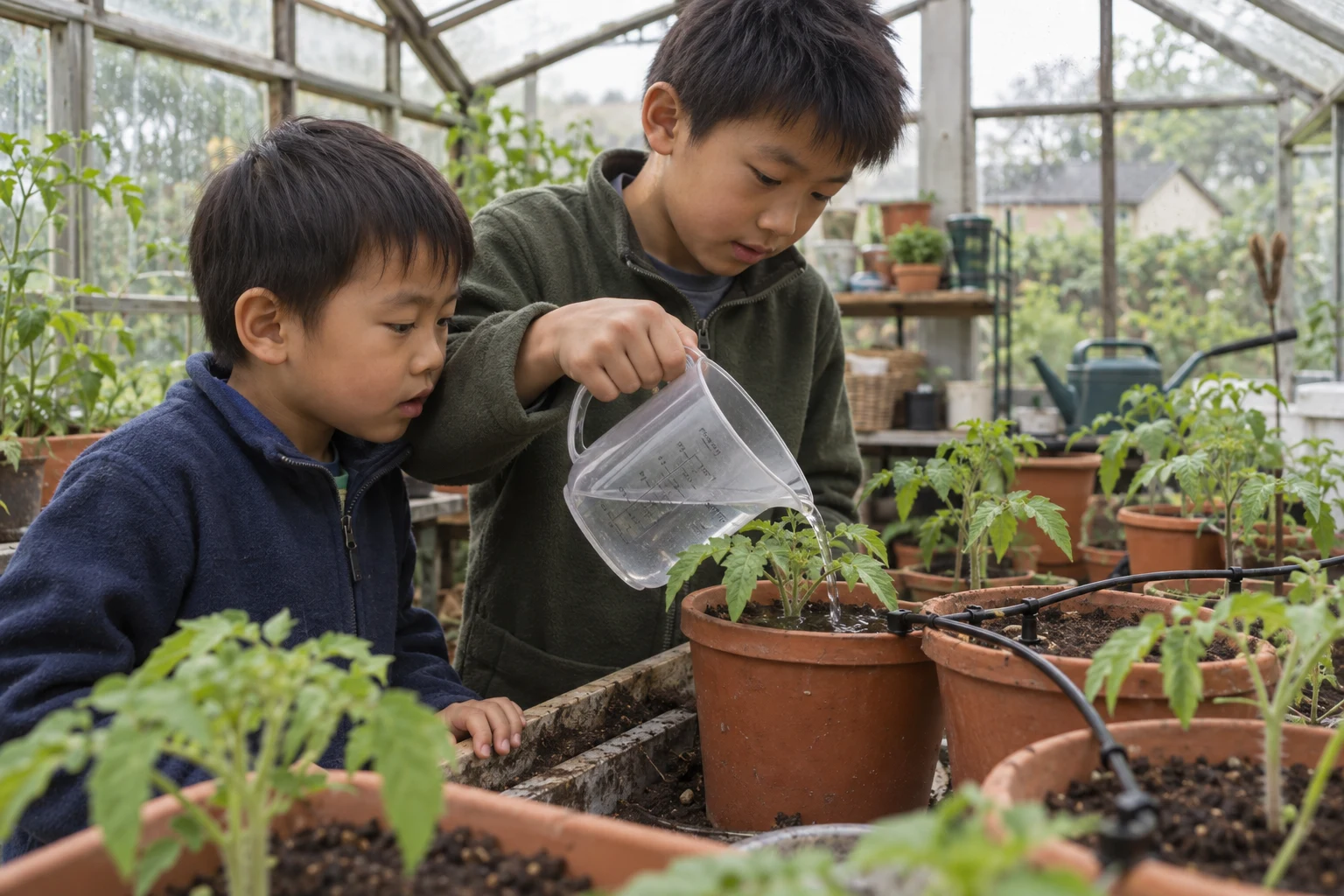
Imagine the question is: How could we grow food using less water?
Day 1 — Wonder
Visit a garden or greenhouse. Observe how plants receive water and where water might be lost.
Day 2 — Question
Choose something to investigate. Could a different watering method reduce waste while keeping a plant healthy?
Day 3 — Experiment
Set up a small, fair comparison with adult guidance. Decide what to measure and begin recording observations.
Day 4 — Build
Create a simple watering device or model based on what we know so far. Identify what still needs testing.
Day 5 — Contribute
Share the design, early observations and unanswered questions with somebody who grows plants.
The experiment may need several more weeks. Friday is a chance to explain progress, not pretend the question has been settled.
Children experience an important part of thinking about the future: acting with incomplete information while continuing to learn.
AI should help children challenge their predictions
AI could be useful in these activities.
Professor LOL might ask:
“What would have to be true for your idea to work?”
“Can you imagine a different outcome?”
“Who have you forgotten to ask?”
“How could you test this without spending much money?”
It could help children compare explanations and explore consequences.
But its predictions should also be questioned.
An AI can produce a convincing story about the future. Children need to learn that a convincing story still needs evidence.
Sometimes a conversation with a shopkeeper, farmer or grandparent will reveal something the AI missed.
Sometimes the experiment will.
How would we know they are learning?
A child does not need to predict an event correctly to show progress in Future Studies.
I would look at how they think and respond.
Can they distinguish an observation from a guess?
Can they explain why they expect something to happen?
Can they imagine more than one outcome?
Can they identify who might be affected?
Can they design a small test?
Can they update their view when the evidence changes?
And can they turn what they learn into a useful action?
We could keep a simple prediction journal:
What do I think will happen?
Why?
How confident am I?
When will I check?
Later, we return to it.
The purpose is to discover which clues were useful, which assumptions were weak and how our thinking has improved.
What kind of future is worth building?
There is also a question beyond what might happen.
What do we want to happen?
A technology can be profitable without being helpful to everyone.
A machine can save time while creating new problems.
Something can be possible without being a good idea.
Children should have space to discuss fairness, privacy, responsibility and the kind of communities they want to live in.
Adapting to change matters.
So does deciding which changes deserve our effort.
Preparing for a world we cannot fully describe
I don’t know which jobs my sons will do.
I don’t know which technologies will become ordinary parts of their adult lives.
I cannot promise them a world that stays familiar.
What I want to give them is the ability to keep learning when it doesn’t.
Strong academic foundations.
The curiosity to notice change.
The judgement to question confident claims.
The imagination to see possibilities.
And the courage to test an idea, change direction and contribute.
That is why Future Studies belongs in Learning of Life.
Our children will inherit a changing world.
They should have opportunities to practise shaping it.
The world is our classroom.
The subjects schools forgot to teach
Explore the life skills that grow from strong academic foundations.
Read the previous story →