A leaking tap, a missing bus, a mosquito in the classroom or a meal that costs more than expected can become a lesson. The question is whether adults allow children to investigate the problem—or solve it before the child has even noticed it.
We often talk about “real-world learning” as if it requires a special trip. A museum. A farm. A science centre. Those places can be wonderful, but the real world is already full of curriculum.
It is in the dripping tap. The broken zipper. The queue at immigration. The electricity bill. The rice that went wrong in the cooker.
These are not interruptions to education. They are invitations into it.
Children do not need a problem with a worksheet attached
When something breaks, my first instinct is still to fix it quickly. I am an adult. I know how to do many things faster than my children. I also know how satisfying it is to remove an inconvenience from the day.
But if I always remove the problem, my children learn something unintended: that problems belong to adults.
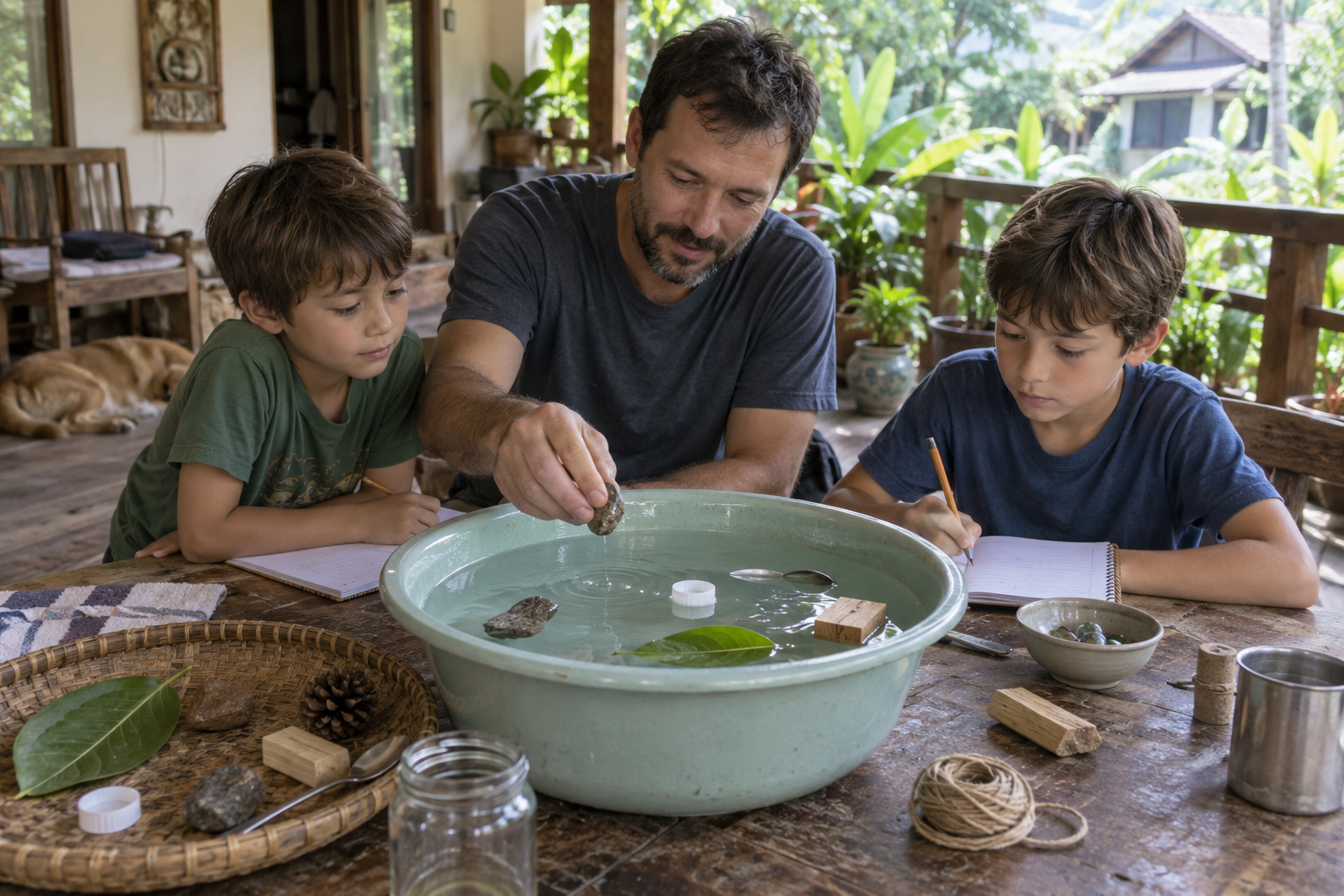
In a Learning of Life activity, the first step is not “find the correct answer.” It is notice what is happening.
What is leaking? How much water is being lost? When did it start? Is the floor becoming slippery? What could we measure before touching anything?
One problem can contain five subjects
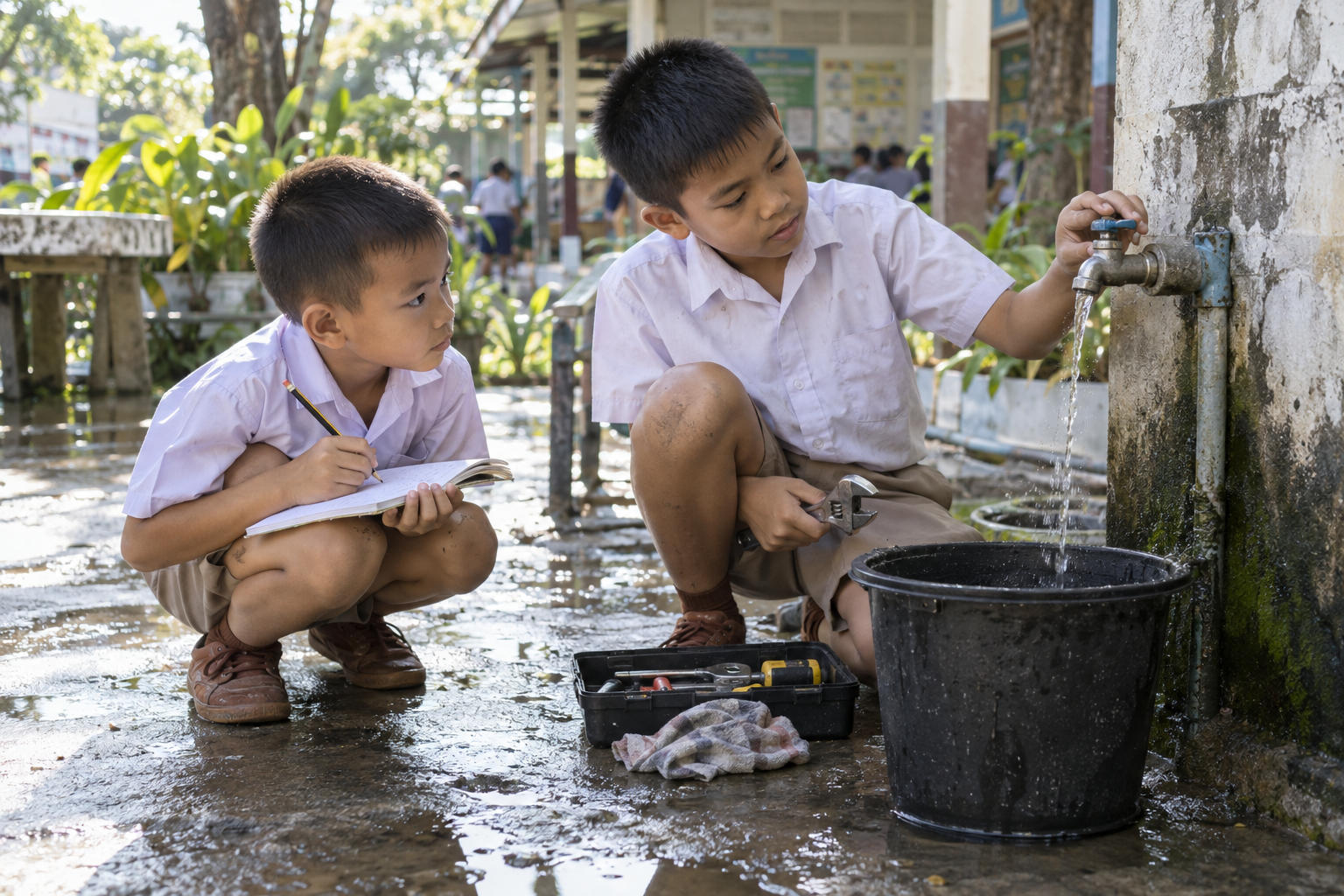
Take the leaking tap.
Science: Where is the water coming from, and why does pressure matter?
Maths: If a bucket collects 300 millilitres in five minutes, how much water is lost in an hour?
English: Can the child describe the problem clearly enough for somebody else to repair it?
Geography: Where does the school’s water come from, and who has access to clean water?
Community action: Who should be told, and what can we do while we wait?
This is why I do not want life skills to be treated as a soft extra after the “real” subjects. The real situation gives the subjects a reason to meet.
The answer is less important than the next question
AI can give a child a plausible explanation in seconds. That can be useful. It can also create the illusion that learning is finished once an answer appears.
In ordinary life, the first answer is often incomplete. The tap may not be the real source of the water. The cheapest product may cost more over time. The mosquito may be small, but its life cycle changes what action makes sense.
So I want my children to practise a simple habit:
AI can help us generate possibilities. It cannot replace looking closely at the particular tap, street, classroom or family in front of us.
Let them be useful before they are impressive
There is a pressure in modern education to make every activity look impressive. A finished presentation. A polished project. A photograph of a child holding the result.
But competence is often quiet.
A child who can explain why a plant is wilting, calculate how much paint is needed, ask a respectful question in a shop or notice standing water after rain is becoming more capable. The work may never become a competition entry. It still matters.
I want my boys to experience the feeling of being useful. Not because adults have praised a perfect answer, but because something around them became a little clearer, safer or better through their effort.
A different definition of school readiness
We usually ask whether children are ready for the next grade. I also want to ask whether they are ready for the next situation.
Can they stay curious when the instructions are missing?
Can they make a reasonable plan with limited materials?
Can they ask for help without giving away responsibility?
Can they explain what failed without hiding it?
Can they use technology without allowing technology to do all the noticing for them?
These abilities do not replace reading, mathematics or science. They are where those foundations become alive.
Start with the problem already in the room
Parents do not need to invent a complicated project this weekend. Choose one ordinary problem and slow down.
Ask your child what they notice. Let them make a prediction. Measure something together. Look up one thing, ask one person and test one small idea. Then talk about what changed.
The goal is not to turn every moment into a lesson. Children also need unstructured time, play and rest.
The goal is to help them see that learning is not limited to the moments when an adult announces: “Now we are learning.”
The world keeps presenting problems. Education should help children meet them with curiosity, evidence and courage.The world is our classroom.
Our children study the past. They should study the future too.
Explore why Future Studies belongs beside maths, science and history.
Read the previous story →