Recently I heard a parent say that she was homeschooling her daughter but would not teach her anything. Her argument was simple: nobody taught the child to walk or speak. The drive came from inside. Protect that natural curiosity, and learning will take care of itself.
I understand why this idea is attractive.
Children arrive with an extraordinary desire to explore. They touch, copy, climb, test, repeat and ask questions long before anybody gives them a worksheet. Too much control can weaken that desire. When every question, activity and answer is chosen by an adult, children can begin to believe that learning belongs to somebody else.
But I cannot follow the argument all the way to its conclusion.
Curiosity is a powerful engine. It is not a complete map.
Children cannot choose what they cannot see
A child may be fascinated by dinosaurs, football or drawing. That interest is real and worth following. But how can the child become curious about algebra, ancient Chinese history, microorganisms or a musical instrument they have never encountered?
Freedom only works inside the world a child has been shown.
If we never introduce poetry, engineering, maps, farming, philosophy, woodworking or another language, the child cannot meaningfully choose among them. Their education is still being curated—just invisibly, by their home, their screens, their neighbourhood and whatever happens to cross their path.
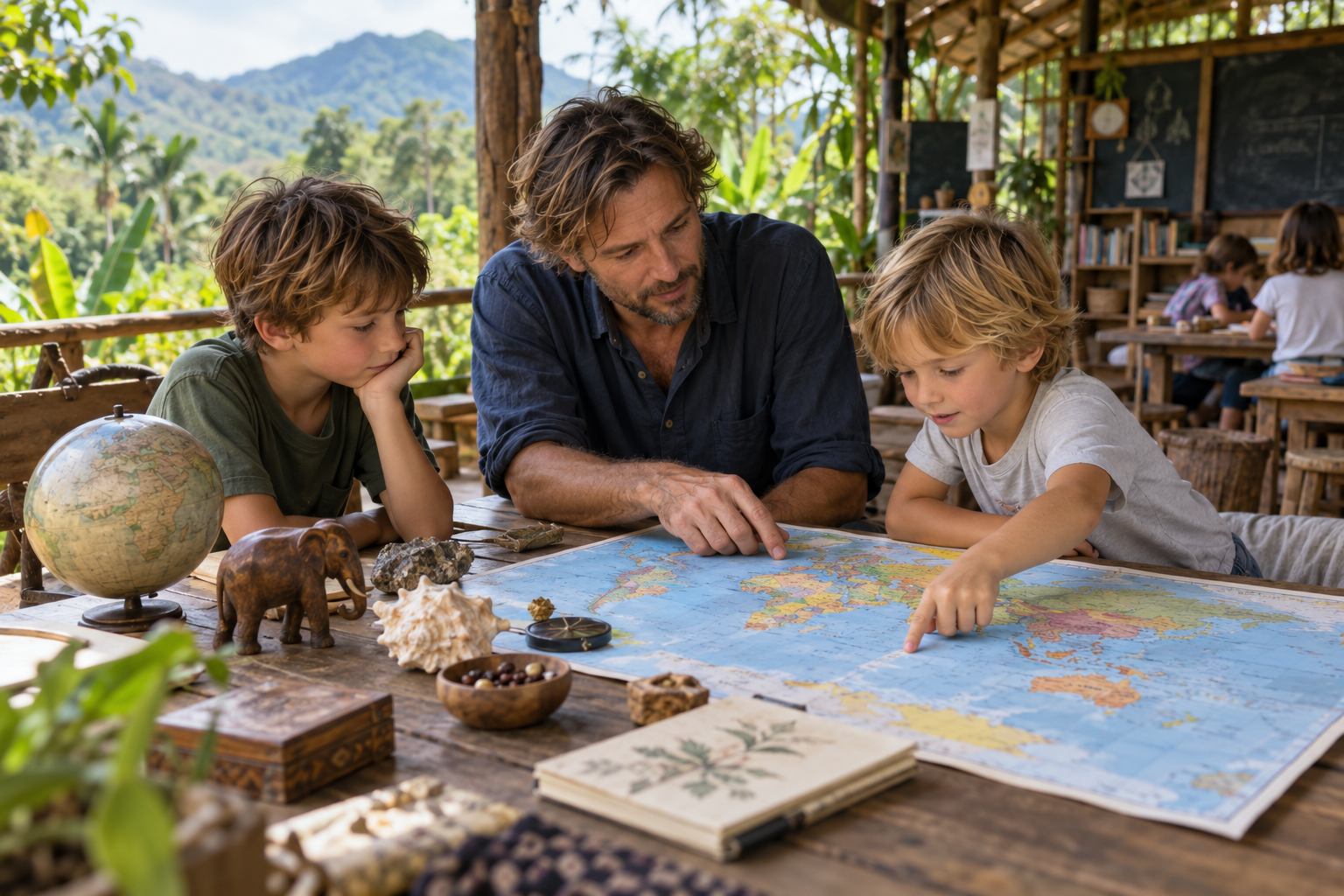
Adults therefore have a responsibility to open doors. Not to push a child through every door, but to make sure there are enough doors to discover.
Even walking and speaking are not learned alone
It is true that we do not teach walking with formal lessons. Yet a child learns inside an intensely supportive environment. Adults provide safe spaces, hold hands, respond to attempts and encourage another try after a fall.
Language is even more social. Children hear thousands of words, watch faces, copy sounds, receive responses and slowly discover that communication changes what happens around them. The motivation may come from inside, but the knowledge comes through relationships.
This matters because the choice is not between natural learning and adult interference.
The real question is: What kind of adult involvement helps the child become more capable without taking ownership away?
Some things deserve direct teaching
I want my children to follow questions that light them up. I also want them to read fluently, write clearly and understand mathematics. These foundations increase their freedom because they allow children to investigate almost anything else.
There is no virtue in forcing every child to rediscover knowledge that humanity has already spent centuries developing. A good explanation at the right moment can save days of confusion. A skilled teacher can notice a misunderstanding that the child cannot yet see.
Direct teaching is not the enemy. Teaching becomes a problem when it occupies the whole educational landscape—when the child never chooses, never tests, never contributes and never develops a question of their own.
Knowledge is passed between generations
Much of what makes us human is inherited culturally rather than biologically. We learn how to use tools, grow food, tell stories, solve equations, organise communities and care for one another because somebody shows us what previous generations discovered.
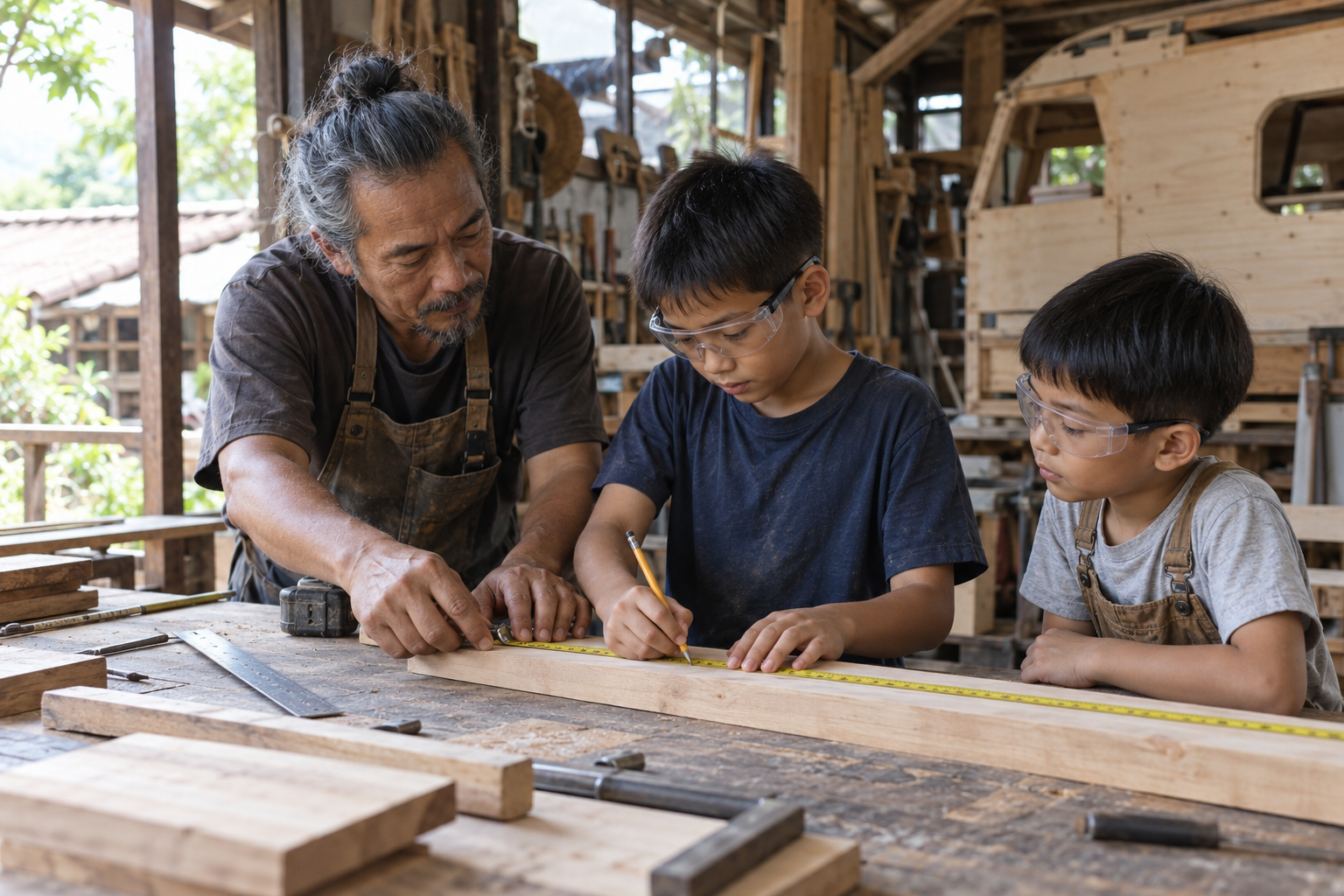
When an experienced craftsperson shows a child how to measure wood accurately, that is not destroying curiosity. It is giving the child a capability. What happens next can still belong to the child: What should we build? Could it be lighter? Why did the joint move? How can we improve it?
Three things children need together
I have started to think about a complete education as three connected parts.
Foundations. Reading, writing, maths, science and the knowledge needed to understand the world. These deserve structure, progression and sometimes direct instruction.
Exposure. Encounters with people, places, ideas, cultures, tools and professions that children would not discover from their current interests alone.
Ownership. Time to choose questions, investigate, build, fail, change direction and contribute something real.
Remove foundations and curiosity can remain shallow. Remove exposure and choice becomes narrow. Remove ownership and education becomes compliance.
The parts strengthen one another. Knowledge creates better questions. Exposure reveals new interests. Ownership gives children a reason to practise difficult skills.
AI makes this balance more important
AI can explain almost any subject, create exercises and answer a child’s question immediately. That makes access to instruction far easier than it was when I was young.
But easy answers create a new danger. A child can appear to know something without observing, reasoning or deciding anything. If AI selects the questions, produces the answer and presents the final work, the child may remain a spectator.
We should use AI to widen exposure and support foundations. It can introduce possibilities, adjust an explanation and help a child practise. But the child still needs to investigate reality: speak to people, handle materials, compare claims, make choices and accept responsibility for the result.
AI can feed curiosity. It should not become another authority that quietly replaces it.
The adult changes roles
In Learning of Life, I do not see the adult as only a teacher or only a cheerleader. Different moments require different roles.
Sometimes I am the teacher: “This is how fractions work.”
Sometimes I am the guide: “There are three places we could investigate. Which one interests you?”
Sometimes I am the safety net: “You can try it, but we need protective glasses.”
Sometimes I step back and let the children struggle.
And sometimes I am simply learning beside them.
The skill is not choosing one role forever. It is knowing which role the child needs now—and leaving that role when it is no longer useful.
Structure should serve curiosity
I do not want an education with no curriculum. I want a curriculum that knows its proper place.
We use academic standards to check that important foundations are not being missed. But standards are the floor, not the ceiling. They help us notice gaps; they do not tell us everything worth learning or who a child should become.
The best education I can imagine is neither a tightly controlled system nor a childhood left entirely to chance.
It is a rich environment with knowledgeable adults, strong foundations, broad exposure and genuine freedom to explore. It introduces children to the inheritance of the past while giving them room to build something new.
Curiosity is not a curriculum. A curriculum is not an education. Children need both guidance and freedom—and adults wise enough to know when to offer each.Open the doors. Teach the tools. Then let the child walk through.
Are we preparing children for exams, or for life?
Academic foundations matter, but children also need experience with judgment, uncertainty and responsibility.
Read the previous story →