I am the father of two boys. Like most parents, I think often about their education.
I want them to read, calculate and understand science. But I also want them to become curious, capable and confident human beings.
I want them to know what to do when something breaks, when a plan fails or when nobody can give them the correct answer.
For our family, this kind of education did not begin behind a desk. It began in 2020, in the middle of the rice fields of Bali.
A nature school in the rice fields
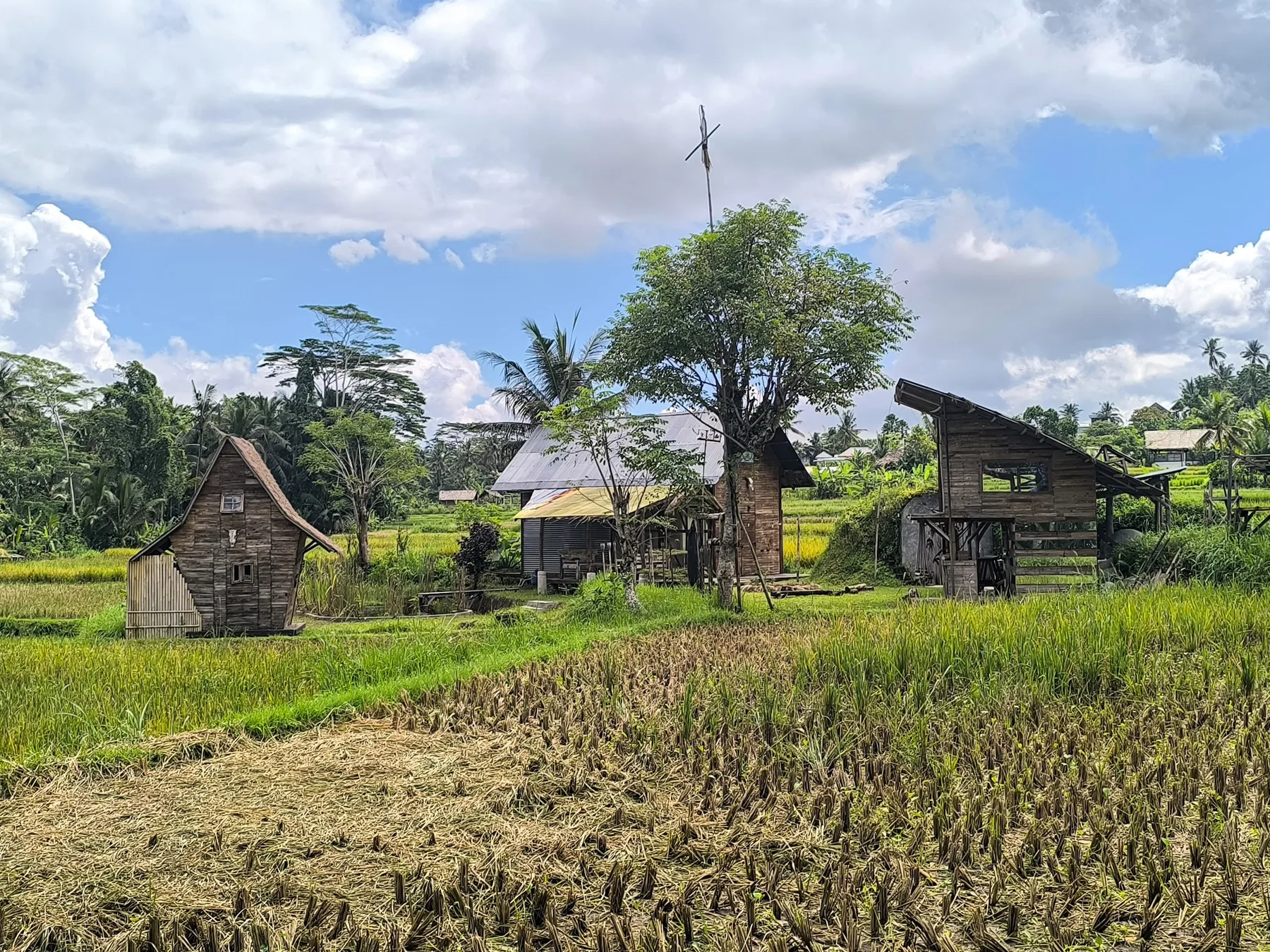
In 2020, we joined Empathy School, a nature school surrounded by rice fields.
It was very different from a conventional school where children spend most of their day sitting inside a classroom. Nature was part of their everyday environment. The children could explore the rice fields, observe animals and plants, get dirty, build things and turn ordinary moments into discoveries.
I became closely involved in the education of my own children and the other children at the school.
I organised a camping trip and helped start a survival class. One of our biggest adventures took the children to an uninhabited island near Lombok.
There, survival was no longer something they only heard or read about. It became something they experienced. They had to observe their surroundings, think practically and work together. They learned that water, shelter, food, weather and teamwork are all connected.
Not every experience needed to be a large organised adventure. Some of the best learning happened when we simply allowed the children to explore the nature and rice fields around the school.
Children do not dislike learning. They dislike learning that feels disconnected from life.
My boys often did not want to leave before 6:30 in the evening. They wanted to continue playing, building, discovering and learning with their friends.
A small shed that kept growing
Because my boys wanted to stay at school until the evening, I spent a lot of time waiting for them. Instead of repeatedly trying to make them leave earlier, I decided to adapt.
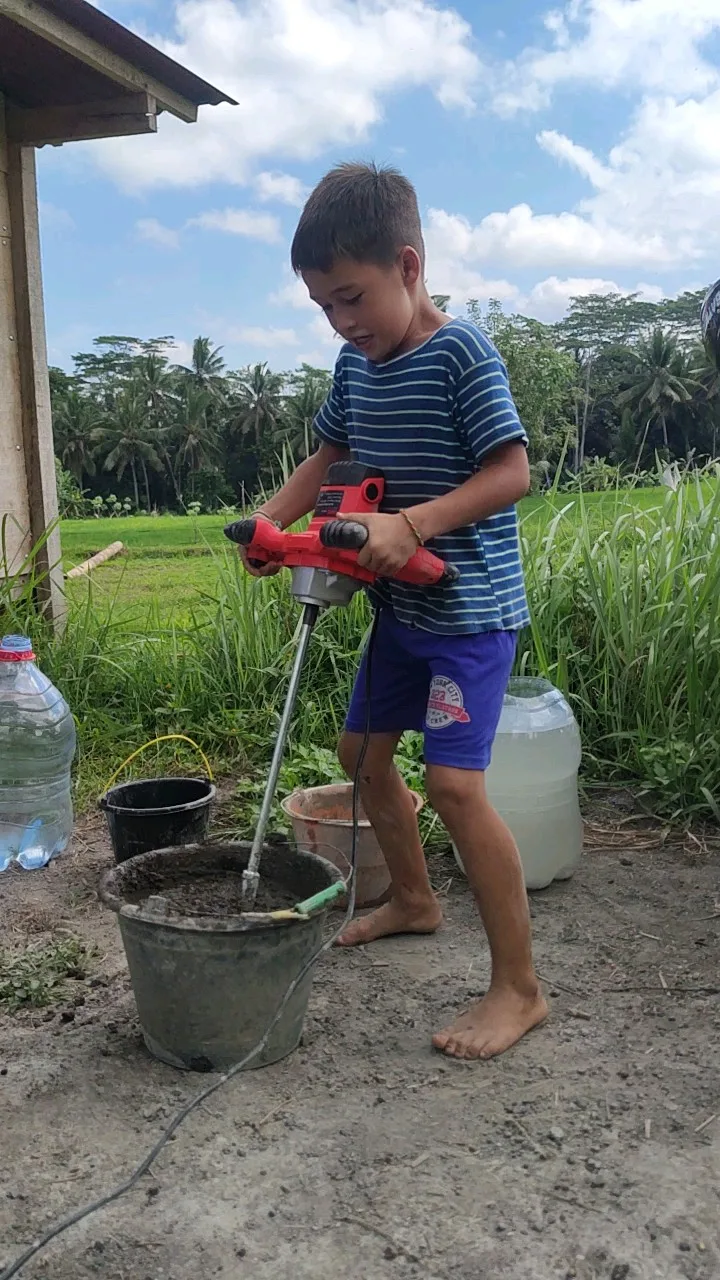
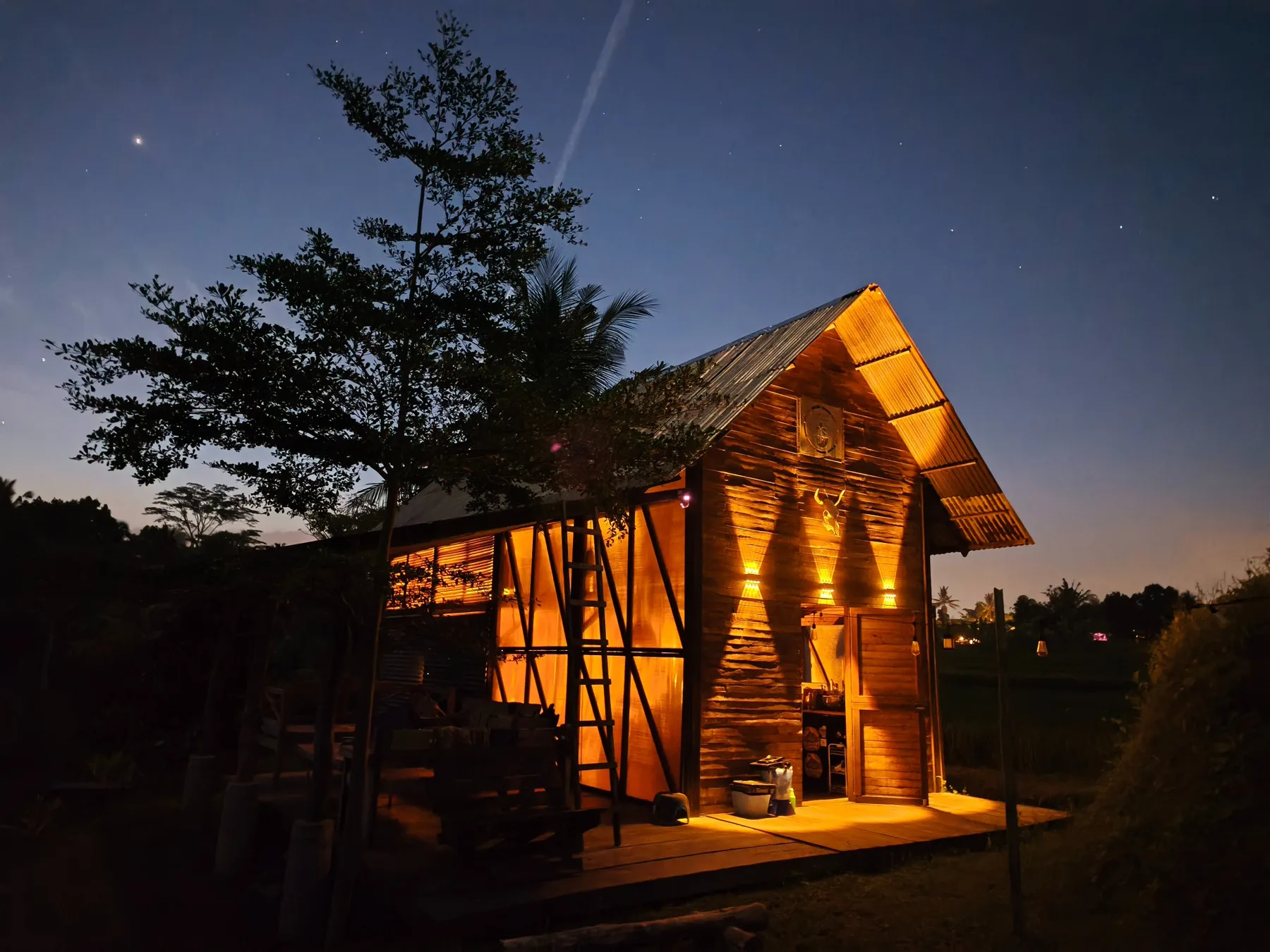
I rented a piece of land next to the school. Together with the children, I began building a small shed where I could work while they continued exploring the school grounds.
The original idea was simple. The shed was not.
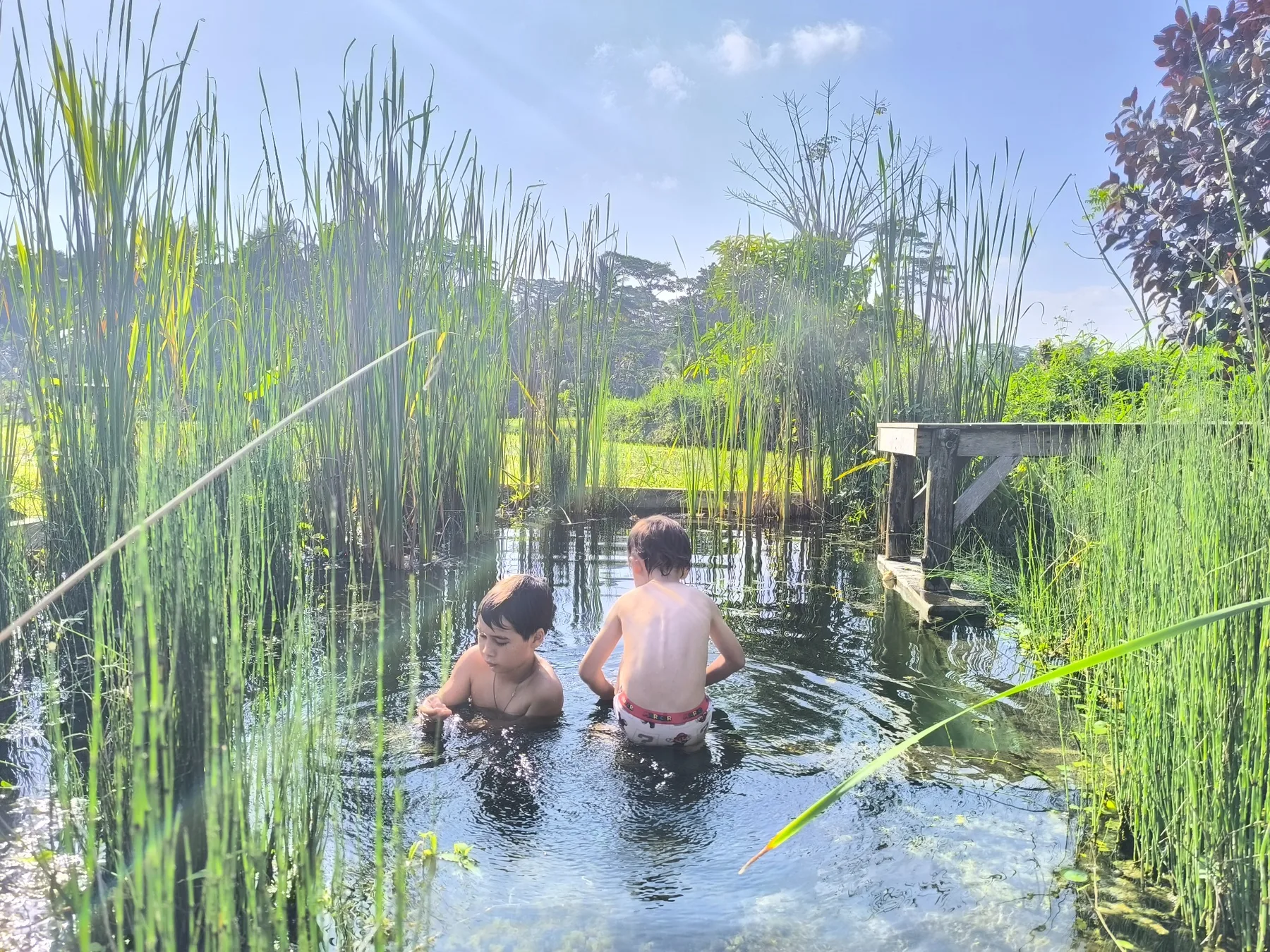
The small structure kept growing until it became a 1,000 m² project with a sauna, a natural swimming pool and even a cave. The project was fully off-grid and built using recycled materials wherever possible.
What began as a practical solution became a living experiment.
How could we collect and manage water?
How could we generate our own electricity?
How could a swimming pool work with nature?
How could discarded materials receive a second life?
These were not questions from a textbook. They were real questions with visible consequences.
Learning by making something real
The children watched an idea become a drawing, a drawing become a structure and a small structure become something much larger than we had originally imagined.
They also saw the mistakes. A piece might not fit. A measurement could be wrong. A material might behave differently from what we expected. Something that looked easy on paper could become difficult once we started building it.
Those moments became lessons. The children learned that mistakes are not proof that you cannot do something. Mistakes provide information about what to try next.
Building introduced mathematics, design, materials and engineering. The natural pool introduced water quality, filtration, plants and ecosystems. The off-grid systems introduced electricity, solar energy, water management and responsible consumption.
Life did not divide these lessons into separate school subjects. One problem could involve science, mathematics, creativity, economics and teamwork at the same time.
Community matters more than possessions
One of the most important lessons had very little to do with construction or technology.
For our family, community and friendship have always been more valuable than things and possessions. The project was never meant to become a private place filled with expensive objects. Its real value came from the people who used it.
We regularly opened the space for events, playdates and informal gatherings. Friends came together for pizza, barbecues, conversations and long afternoons of children playing freely.
The children could see that a building only becomes meaningful when people share it. A pool is more fun with friends. Food tastes better around a shared table. A simple evening becomes memorable when a community feels welcome.
This taught them that a rich life is not measured by how many things we own. It is measured by the relationships we build, the experiences we share and the people who know they are welcome.
A dream to explore more of Indonesia
As a family, we also made trips to other islands across Indonesia. We discovered many beautiful, undeveloped places. They offered nature, freedom and adventure, but often had no facilities and nowhere suitable for a family to stay.
Together with my boys, I began dreaming about another solution.
What if we could bring our own small home with us? What if we could carry our sleeping space, water and electricity? What if we could stay close to the beaches, forests and communities we wanted to explore?
That dream became the beginning of the Komodo Camper.
The camper began with ice-cream sticks
We did not begin with expensive materials, professional software or detailed engineering drawings.
We began with ice-cream sticks.
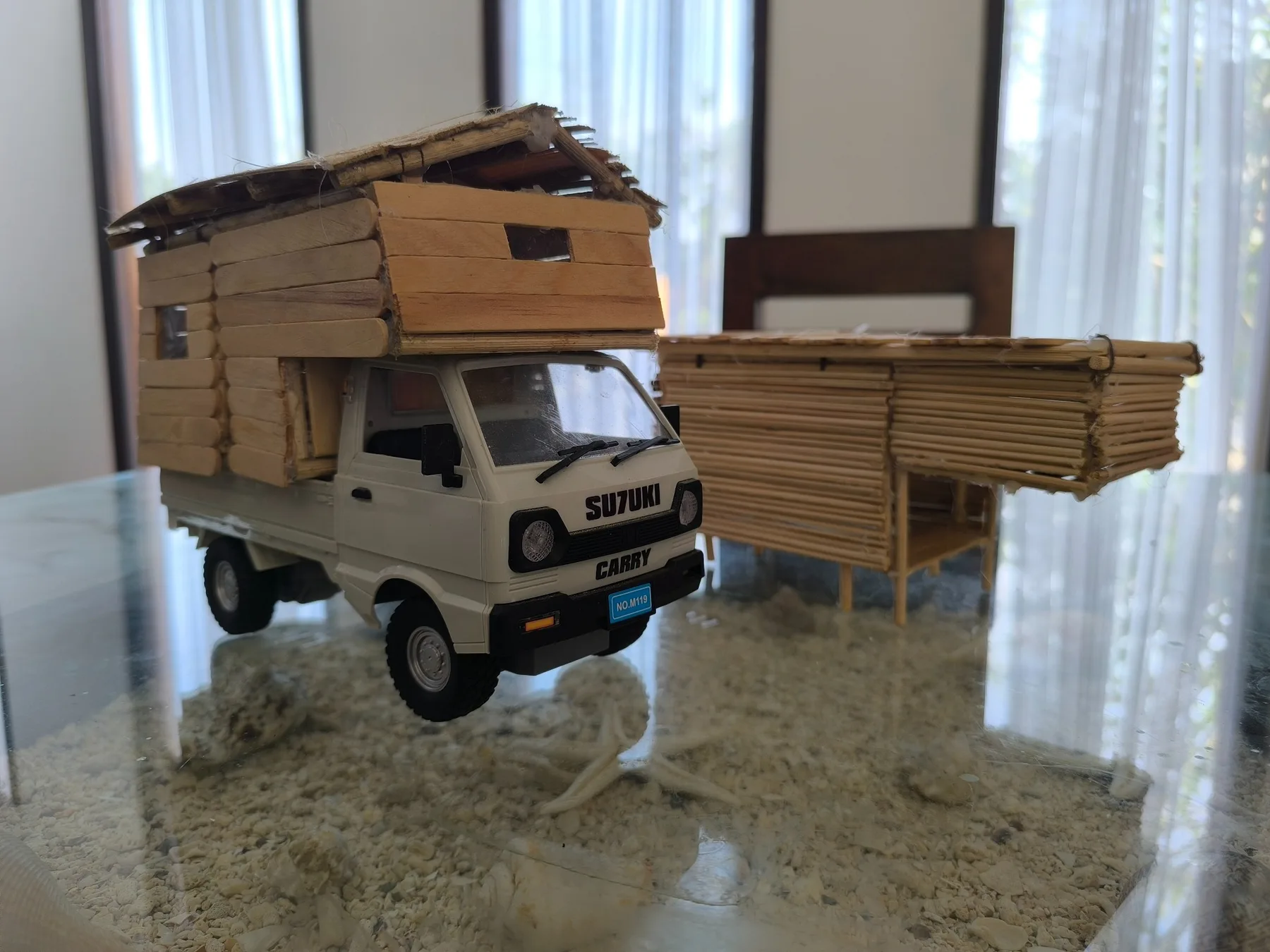
We had a small remote-controlled model of a Suzuki Carry pickup. Together, we used ice-cream sticks to build our first miniature camper on the back of it.
That little model allowed the children to turn an idea into something they could see and hold. We could experiment with the shape, imagine where everybody would sleep and discuss how a tiny space might become a travelling home.
The model was simple, but the dream behind it was not.
It taught the children that a large project does not need to begin with money, perfect plans or expert knowledge. It can begin with curiosity, a few basic materials and the courage to make the first version.
Do not wait for the perfect final version. Build a small first version and learn from it.
From a small model to the Komodo Camper
The ice-cream-stick model became the starting point for the real Komodo Camper—a wooden, two-storey camper designed to help our family discover more of Indonesia.
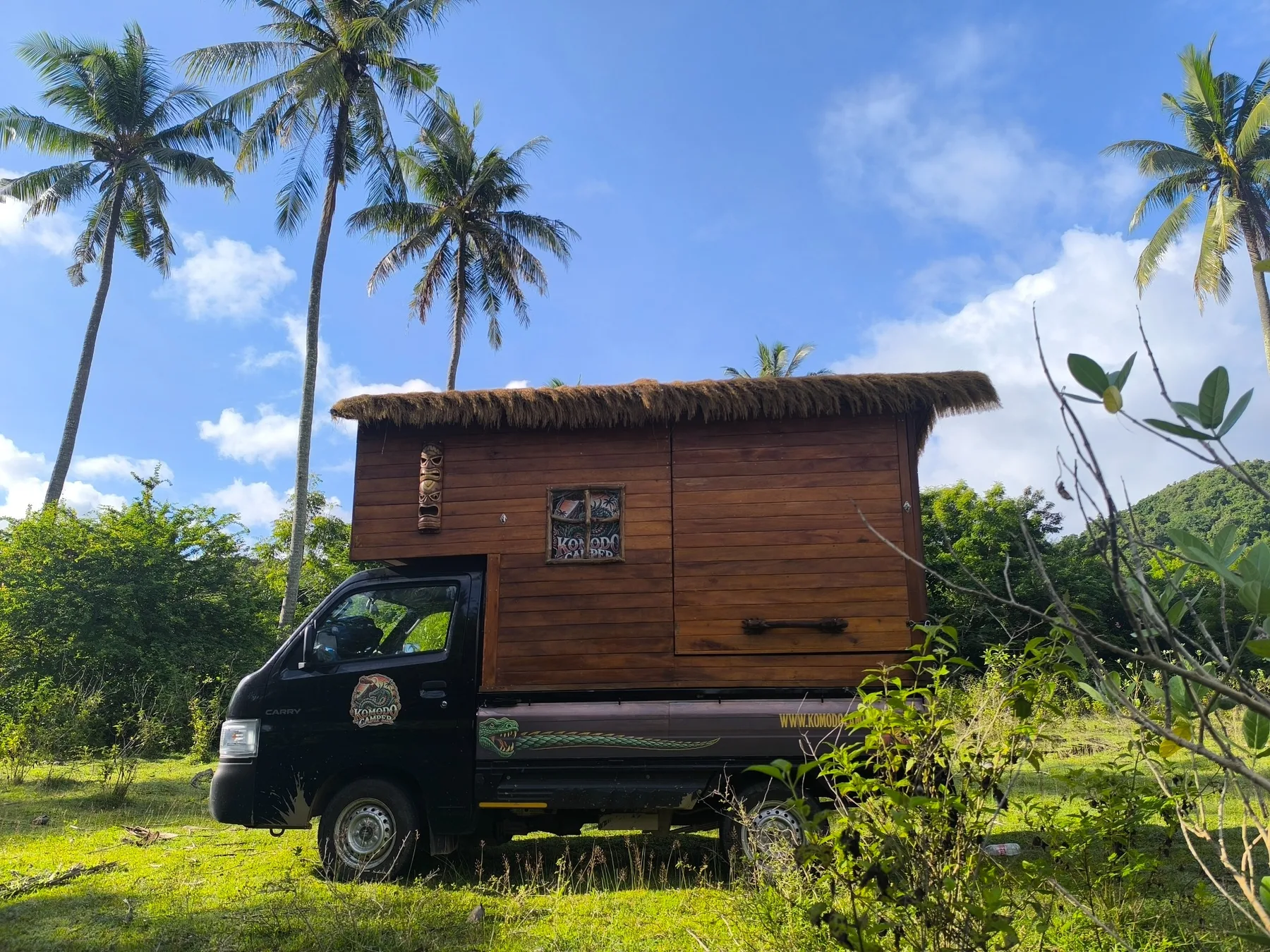
Again, the finished camper was only part of the lesson. The real education was hidden inside the questions.
How much space does a family actually need?
How do we store water and generate electricity?
How do we make something strong without making it too heavy?
What happens when something breaks far away from home?
My boys did not need to understand every technical detail. They needed to see how a dream could become a model, how a model could become a plan and how a plan could eventually become something real.
Building the camper showed them that they did not always need to buy what already existed. If they could imagine something different, they could begin creating it.
I want my boys to see themselves as creators—not only as consumers.
Indonesia became our classroom
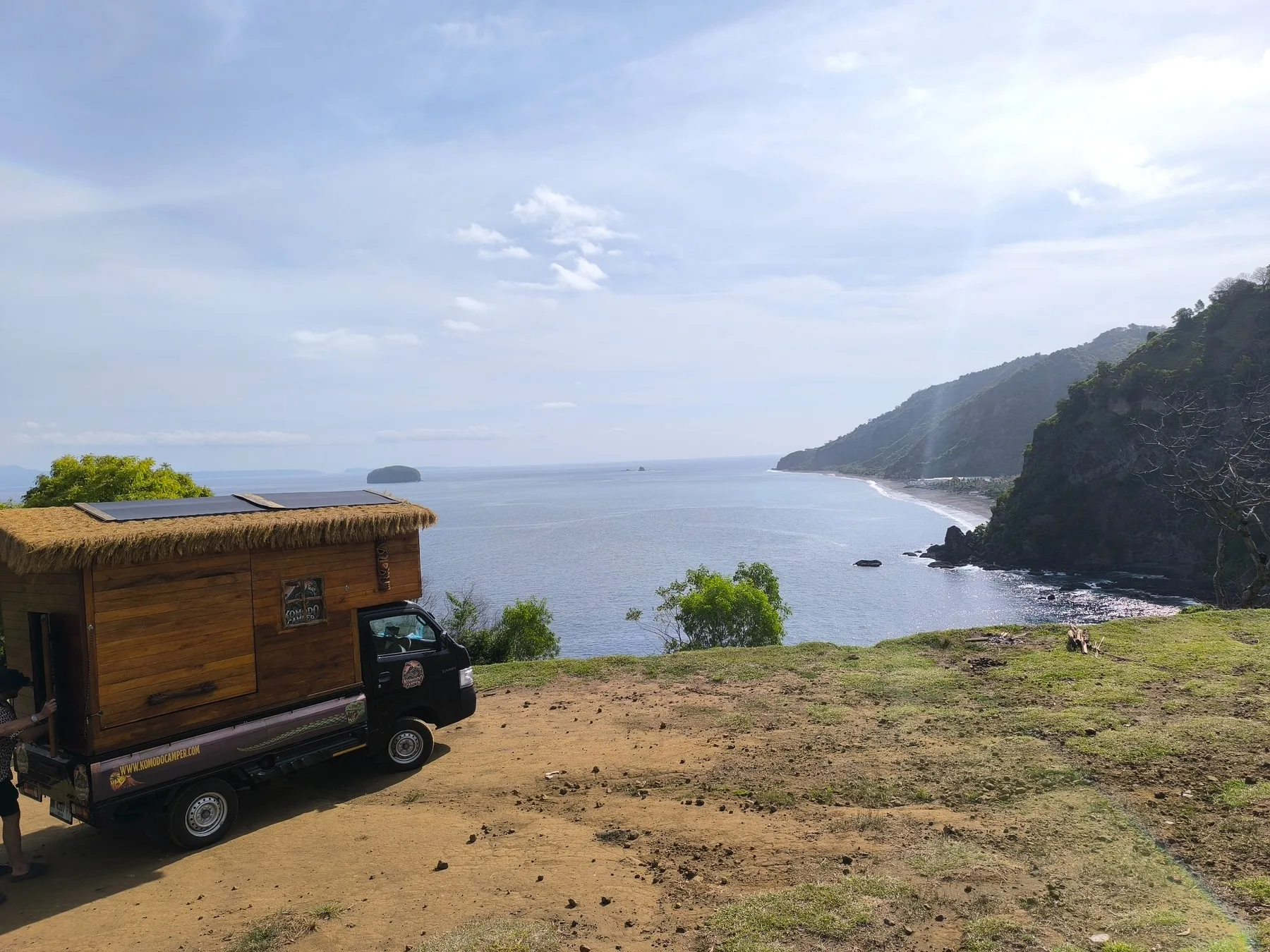
Travelling across Indonesia in the camper gave us another kind of education. Every place brought new landscapes, people, foods, traditions and problems to solve.
A journey rarely follows the plan perfectly. Roads change. Weather changes. Something gets lost or breaks. People misunderstand each other. Sometimes we need help from somebody we have never met.
These experiences teach adaptability in a way that a worksheet cannot.
What I learned as a father
I did not always have the answers—and that became one of the most valuable parts of the experience.
Parents often feel that we must know everything before we can teach our children. But children do not need a parent who always has the correct answer. They need adults who are willing to investigate with them.
Sometimes I could explain what was happening. Sometimes we searched for information together. Sometimes we asked somebody with more experience. Sometimes we tried something and discovered that our first idea was wrong.
Saying, “I don’t know—let’s find out,” did not make me a weaker father. It showed my boys what real learning looks like.
Education for an unpredictable future
Artificial intelligence will change what children need to know and how quickly information becomes available. Memorising facts will not be enough.
Children will need to ask better questions, judge information, solve unfamiliar problems, work with other people and remain human in a world filled with intelligent machines.
They will need curiosity, courage, empathy, practical ability and the confidence to begin before they know everything. Those abilities cannot be developed only by listening. Children must practise them in real situations.
That does not mean school is unimportant. It means education should not stop when the school day ends.
Learning of Life
These experiences became the foundation of Learning of Life: the belief that the whole world can become a classroom.
It is not about creating perfect children or turning every family moment into a formal lesson. It is about allowing children to participate in real life.
Let them help.
Let them explore.
Let them ask questions.
Let them experience mistakes.
Let them see how the world really works.
A nature school in the rice fields, a survival adventure near Lombok, a small shed that became a 1,000 m² off-grid project and an ice-cream-stick model that became a two-storey camper did not teach my boys everything they need to know.
They taught them something more important: they can learn wherever they are, create something that did not exist before and face a problem without knowing the answer yet.
They can ask, explore, try, fail, learn—and keep growing.
That is what Learning of Life means to our family.The world is our classroom.
Turn one real moment into a lesson today.
Ask one question nobody in your family knows the answer to—then discover it together.
Try the first family mission →